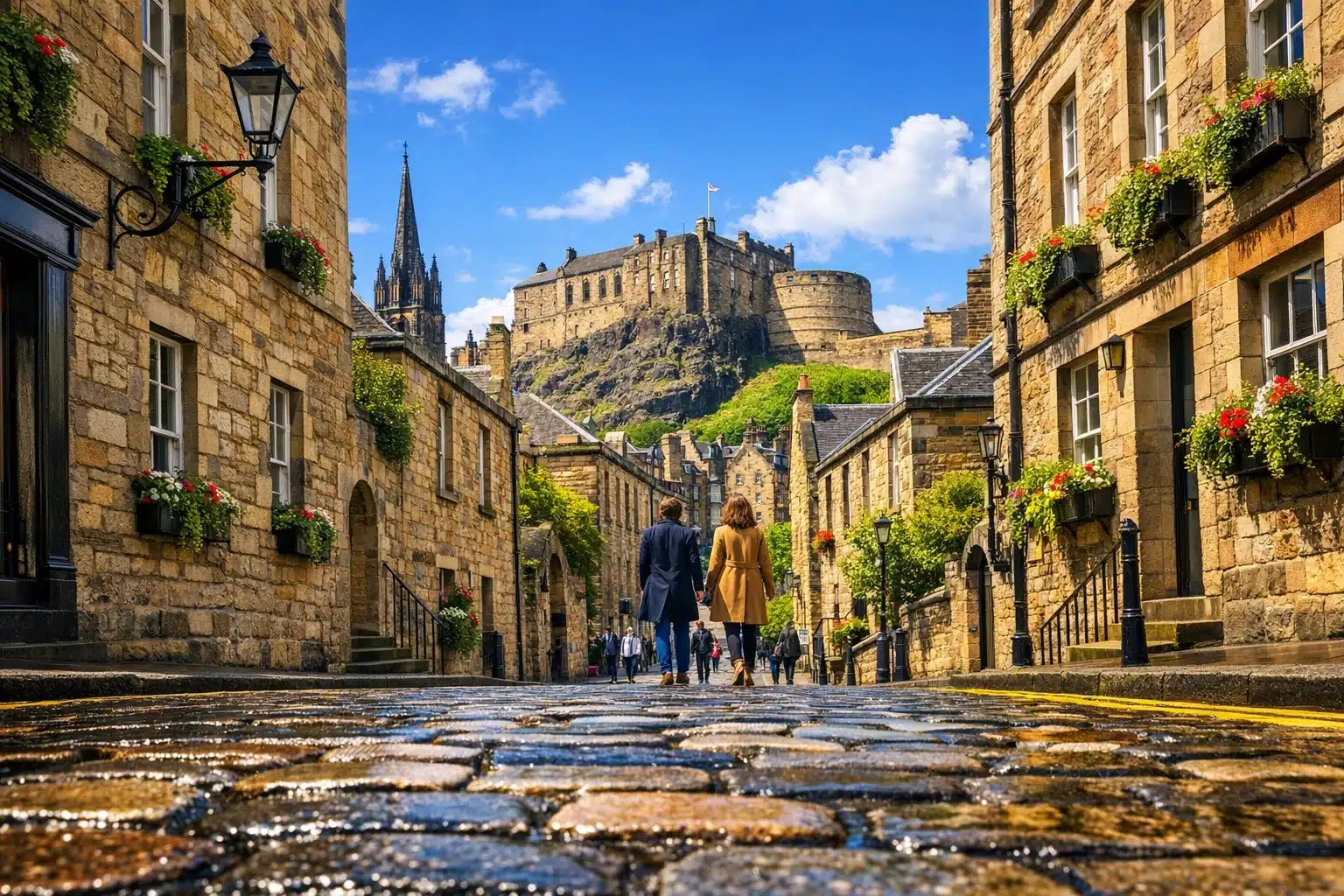
 Artificially generated image
 3-Night All-Inclusive Edinburgh City Break: What Makes This Worth It?
Edinburgh has a rare way of making a short holiday feel layered rather than hurried: within a compact center, travelers can move from castle views to museum galleries, Georgian streets, and late dinners without wasting hours in transit. That efficiency matters when a break lasts only three nights. Knowing what a package really includes, which landmarks deserve your limited time, and how hotel comfort affects energy levels helps turn a quick booking into a smarter, more enjoyable trip.
Outline:
- What a 3-night Edinburgh city break usually includes, and what “all-inclusive” often means in practice
- The historic attractions that define the city, from fortress landmarks to museum-rich streets
- How hotel location, room features, and service influence a short-stay experience
- How to structure three nights well, balancing sightseeing, relaxation, and transport efficiency
- Which travelers benefit most from this style of trip and how to judge whether it is worth the price
What a 3-Night Edinburgh City Break Usually Includes
The phrase “all-inclusive” can sound wonderfully simple, but in a city destination such as Edinburgh it usually means something different from a beach resort package. Instead of unlimited meals and drinks, most city-break offers combine the essential building blocks of the trip into a single booking. That often includes return flights or rail travel, a hotel stay for three nights, and sometimes breakfast. In stronger-value packages, you may also see airport transfers, attraction tickets, or late checkout included. The real question is not whether the phrase sounds generous, but whether the components match how you actually want to spend a short break.
Explore Edinburgh city break trends with insights on hotel stays, local attractions, comfort features, and short getaway experiences.
For travelers comparing deals, it helps to separate typical inclusions from common assumptions. Many visitors imagine an Edinburgh package covers nearly everything from meals to museum entry, yet that is rarely the case. A realistic package often includes:
- Three nights in a hotel, guesthouse, or serviced apartment
- Return transport by air or rail, depending on departure point
- Breakfast, especially in mid-range and upscale hotel deals
- ATOL protection or similar booking protection when flights are involved
- Optional extras such as castle tickets, hop-on hop-off bus access, or airport transfers
Just as important are the items that are frequently excluded. Lunches and dinners are usually not covered. Entry to major attractions may be extra, and city taxes or small booking fees can appear at the final payment stage. If the hotel is in a heritage building, extras such as parking, spa access, or larger-room upgrades may also cost more.
Where package value becomes more interesting is timing. Edinburgh pricing moves sharply with demand. August, during the Fringe and associated festivals, is typically the most expensive period, while late autumn and early spring often offer better hotel rates. December can also climb because of festive markets and seasonal travel demand. On a three-night trip, that seasonal swing matters because accommodation forms a large part of total spend. A package can be especially worthwhile when it secures a central hotel that would be costly to book separately.
There is also a convenience factor that is easy to underestimate. A neatly bundled trip can remove the friction of planning, especially for first-time visitors who want Waverley Station, the Royal Mile, or Princes Street within easy reach. The trade-off is flexibility. A DIY trip may let you choose a more distinctive boutique hotel, later train times, or a restaurant-led itinerary. A package, meanwhile, tends to reward travelers who prefer speed, simplicity, and a clear budget over endless comparison tabs. For many people, that alone can make the break feel worth it before the suitcase is even packed.
Historic Attractions in Edinburgh That Reward a Short Stay
Edinburgh works so well as a city break because its history is not tucked away in one district or reserved for museum labels. It rises around you. Castle Rock dominates the skyline, closes narrow into steep alleyways, and grand Georgian terraces open unexpectedly after medieval turns. The city’s Old Town and New Town together form a UNESCO World Heritage Site, recognized in 1995, and that designation helps explain why even a casual walk here can feel like a lesson in architecture, politics, and urban design. For travelers on a three-night stay, the advantage is clear: several major sights sit close enough together to explore without wasting valuable time on long journeys.
Edinburgh Castle is often the first stop, and for good reason. Perched high on volcanic rock, it offers layered history rather than a single headline attraction. Visitors can see the Honours of Scotland, the Stone of Destiny, military collections, and sweeping views across the city. It is also one of Scotland’s most visited paid attractions, which means advance booking is usually wise, especially in peak season. The experience can feel crowded at midday, so an early entry slot often pays off.
The Royal Mile, stretching between the Castle and the Palace of Holyroodhouse, is less a single attraction than a corridor of centuries. Along it, travelers can weave between St Giles’ Cathedral, closes leading into quieter courtyards, small museums, shops, and street performers. The palace at the lower end adds a royal dimension, with rooms associated with Mary, Queen of Scots and a setting that contrasts sharply with the fortress mood of the Castle.
Several other sites deepen the story without demanding a full day each:
- National Museum of Scotland, where entry to the main museum is free and exhibitions cover science, design, natural history, and Scottish heritage
- The Real Mary King’s Close, which uses preserved underground spaces to interpret life in earlier centuries
- Greyfriars Kirkyard, valued for both its atmosphere and its links to civic, literary, and religious history
- Calton Hill, where monuments and panoramic views show how landscape and city identity fit together
What makes Edinburgh especially satisfying is the contrast between official history and lived texture. You can spend the morning with royal regalia, then turn a corner into a bookshop café, then stand before a stone tenement that has watched generations come and go. The city does not present history as a sealed exhibit. It lets it remain part of the street. That quality is ideal for short stays because even the gaps between ticketed attractions feel meaningful. Instead of racing to accumulate checkmarks, travelers can absorb atmosphere while still covering a strong list of landmarks. For a three-night break, that balance between depth and convenience is one of Edinburgh’s strongest advantages.
Hotel Comfort and the Reality of a Short-Stay Experience
On a long holiday, travelers can forgive a few inconveniences because there is time to recover from them. On a three-night city break, comfort matters more. A noisy room, awkward location, or weak breakfast can quietly reshape the whole experience. Edinburgh makes this especially relevant because many of its hotels occupy older buildings full of charm but not always built for modern expectations. A stone staircase may look romantic in photos; after a day on cobbles and hills, it can feel less poetic.
The first comfort decision is location. Staying in the Old Town places you near the Royal Mile, the Castle, and a dramatic historic setting, but it can also mean steep streets, heavier foot traffic, and smaller rooms in converted properties. New Town hotels often offer broader streets, a calmer evening atmosphere, and easier access to shopping, dining, and transport. Leith can deliver stylish waterfront options and strong restaurant choices, though it works best for travelers comfortable using trams or buses. For first-time visitors with only three nights, centrality usually beats novelty.
Room comfort also deserves a more practical eye than many booking pages encourage. For a short stay, the most valuable features are not always luxurious ones. They are the details that reduce friction:
- Good soundproofing or a room away from street noise
- Reliable heating, especially in cooler months
- A comfortable mattress and blackout curtains
- A walk-in shower or well-designed bathroom
- Fast check-in, luggage storage, and early breakfast availability
Breakfast itself is often a deciding factor in whether a package feels worth the cost. In Edinburgh, where days can begin with a climb, a museum session, or a train departure, a solid hotel breakfast creates both convenience and savings. It does not need to be extravagant. Fresh fruit, hot options, decent coffee, and efficient service are often more useful than a long but unremarkable buffet.
There is also an important difference between style and ease. Boutique hotels may offer memorable interiors and a strong sense of place, while larger chain hotels often win on consistency, lifts, desk service, and predictable room standards. Serviced apartments can be excellent for families or travelers wanting extra space, though they sometimes lose the immediate support of a staffed front desk. None of these models is automatically better; the right fit depends on who is traveling and how packed the itinerary will be.
Short-break comfort is really about energy management. When a hotel helps you sleep well, store bags after checkout, dry off after rain, and start the morning without delay, it quietly improves the entire trip. Edinburgh is a city that rewards walking, looking up, and lingering. A well-chosen hotel makes you more likely to enjoy all three. A poor one turns every return in the evening into a small negotiation with tiredness. For a three-night escape, that difference is larger than many travelers expect.
How to Make Three Nights in Edinburgh Feel Full, Not Frantic
The smartest Edinburgh breaks are not built around squeezing in every museum, viewpoint, and dinner recommendation. They work because the city’s scale allows a more measured rhythm. Three nights is enough for a satisfying introduction if you structure the days with some intention. The aim should be variety rather than volume: one major historic site, one or two smaller stops, time for unplanned wandering, and a hotel base that makes returning easy rather than annoying.
A practical arrival day often starts with transport simplicity. Edinburgh Airport is linked to the city by tram and bus, and Waverley Station sits centrally for rail arrivals, so many travelers can reach their hotel without much trouble. That first afternoon is best used for orientation instead of overambitious ticketing. A walk along Princes Street Gardens, the Scott Monument area, or part of the Royal Mile gives immediate atmosphere without mental overload. In the evening, the city begins to glow in a different register: stone facades darken, closes become moodier, and the skyline starts doing half the storytelling for free.
A strong full day might focus on the Old Town. Castle in the morning, Royal Mile through midday, then St Giles’ Cathedral, a close or two, and perhaps an underground history experience or museum visit later on. Another day can balance Holyroodhouse, Calton Hill, and the National Museum of Scotland, or shift outward slightly depending on interests. For travelers who prefer scenic pause points, Dean Village, the Water of Leith path, or a gentle evening in New Town can add contrast to the more crowded central routes.
It also helps to respect Edinburgh’s physical character. The city is beautiful, but it is hilly, often windy, and full of uneven paving. That means a realistic plan should include:
- At least one pre-booked attraction per day rather than four
- Buffer time for queues, weather shifts, and slower walking on steep streets
- Comfortable footwear instead of style-led regret
- Lunch plans that are flexible enough to avoid peak-time pressure
- A sensible cut-off point in the evening if the next morning starts early
This is where a package can become genuinely useful. If breakfast is covered, the hotel is central, and transport has already been arranged, more of your short stay remains available for the city itself. If, however, the package places you too far out or locks you into timings that do not fit your pace, the value drops quickly. Edinburgh rewards freedom within structure. Think of the ideal three-night break as a well-composed playlist rather than a speed run: a few high notes, a few slower tracks, and enough breathing room for the city’s mood to do its work. That is often what makes the trip memorable rather than merely efficient.
Conclusion: Who This Type of Edinburgh Break Suits Best
A 3-night Edinburgh city break tends to suit travelers who want cultural depth without committing to a long itinerary. It works especially well for couples planning a compact escape, solo travelers who enjoy walkable cities, and first-time visitors to Scotland who want a concentrated introduction rather than a countrywide circuit. It can also be a smart choice for busy professionals who value simplicity: book once, arrive quickly, explore on foot, and leave with the sense that the trip had real character. In that context, “worth it” depends less on the label attached to the package and more on whether the booking aligns with your priorities.
If history is your main draw, Edinburgh is unusually strong. Few short-break cities combine a major castle, a preserved medieval spine, royal associations, museums, and dramatic topography so closely together. If comfort matters most, the city can deliver that too, but only if you read hotel details with care. Location, room layout, stairs, noise levels, breakfast quality, and luggage services are not minor footnotes on a three-night stay; they are part of the overall value.
For the target audience most likely to consider this kind of trip, a useful final checklist looks like this:
- Choose a central hotel unless price savings farther out are substantial
- Check whether “all-inclusive” really means breakfast plus transport, or something more limited
- Pre-book at least the Castle and one other priority attraction in busy periods
- Leave space in the itinerary for walking, views, and unplanned stops
- Compare package cost against booking separately, especially outside festival season
The best version of this break is not the one with the most extras printed in bold. It is the one that uses three nights intelligently. That may mean a polished chain hotel near transport, a boutique stay in a Georgian townhouse, or a package that includes just enough to remove hassle while leaving meals and evenings flexible. Travelers who expect a resort-style all-inclusive experience may come away disappointed. Travelers who understand the city-break model often find the opposite: a compact, highly rewarding trip where heritage, atmosphere, and practical convenience come together neatly.
Edinburgh does not need much help to impress. Its skyline is theatrical, its history is visible at street level, and its size makes a short visit genuinely viable. What makes a 3-night break worthwhile is not extravagance but fit. If the inclusions support how you like to travel, the historic sights match your curiosity, and the hotel helps you rest well between long walks and late views, then this kind of trip can feel not only good value, but very well judged. For travelers seeking a memorable short escape with substance, Edinburgh remains one of the strongest options in the UK.