5 Old Household Items That Are Worth Money Today
Why Old Household Items Deserve a Second Look
The attic, pantry, and linen cabinet often hide objects that look ordinary yet carry real historical and market value. A chipped enamel sign, a patterned mixing bowl, or a lamp from the 1950s can attract buyers because design, rarity, and condition matter more than age alone. Learning how to spot clues in materials, maker’s marks, and craftsmanship helps you separate clutter from collectible pieces. That small shift in attention can turn a routine clean-out into a smart, satisfying discovery.
This article follows a simple path so the subject stays practical rather than mysterious. First, it looks at household categories that frequently retain value. Next, it explores which collectible segments are especially active today. Then, it explains how to identify an antique at home without relying on guesswork alone. Finally, it offers sensible advice on care, pricing, and deciding whether to keep, sell, or seek expert help.
Many people assume value comes from age in a straight line, as if every old thing gradually turns into treasure. The market does not work like that. A mass-produced cabinet from 1910 may be less desirable than a well-preserved coffee set from 1965 if the latter fits current decorating tastes, has strong brand recognition, and is easy to display. In other words, demand follows stories, aesthetics, usefulness, and scarcity as much as chronology.
That is why the search for valuable old household goods feels a bit like listening to a house talk back. The worn handle, the factory stamp under a plate, and the deep glow of old wood all offer hints about when an object was made and why someone cared enough to keep it. A practical eye helps, but curiosity matters just as much. Once you know what to look for, everyday rooms begin to behave like small museums with price tags hidden under dust.
Useful clues to keep in mind from the start include:
• age range and production period
• original versus replaced parts
• condition, wear, and repairs
• design movement or maker association
• current collector interest in that category
Five Types of Vintage Household Objects That Often Hold Value
When people ask which old household items are worth money today, the answer usually begins with categories that were once practical, widely used, and visually distinctive. Kitchenware is one of the strongest examples. Mixing bowls, colorful casserole dishes, branded glass containers, stoneware crocks, cast-iron cookware, copper molds, and unusual serving pieces remain popular because they combine function with nostalgia. Certain patterns, colors, and discontinued lines attract especially strong interest, particularly when complete sets survive with minimal damage. A rare lid or matching handle can make a modest object far more desirable than it first appears.
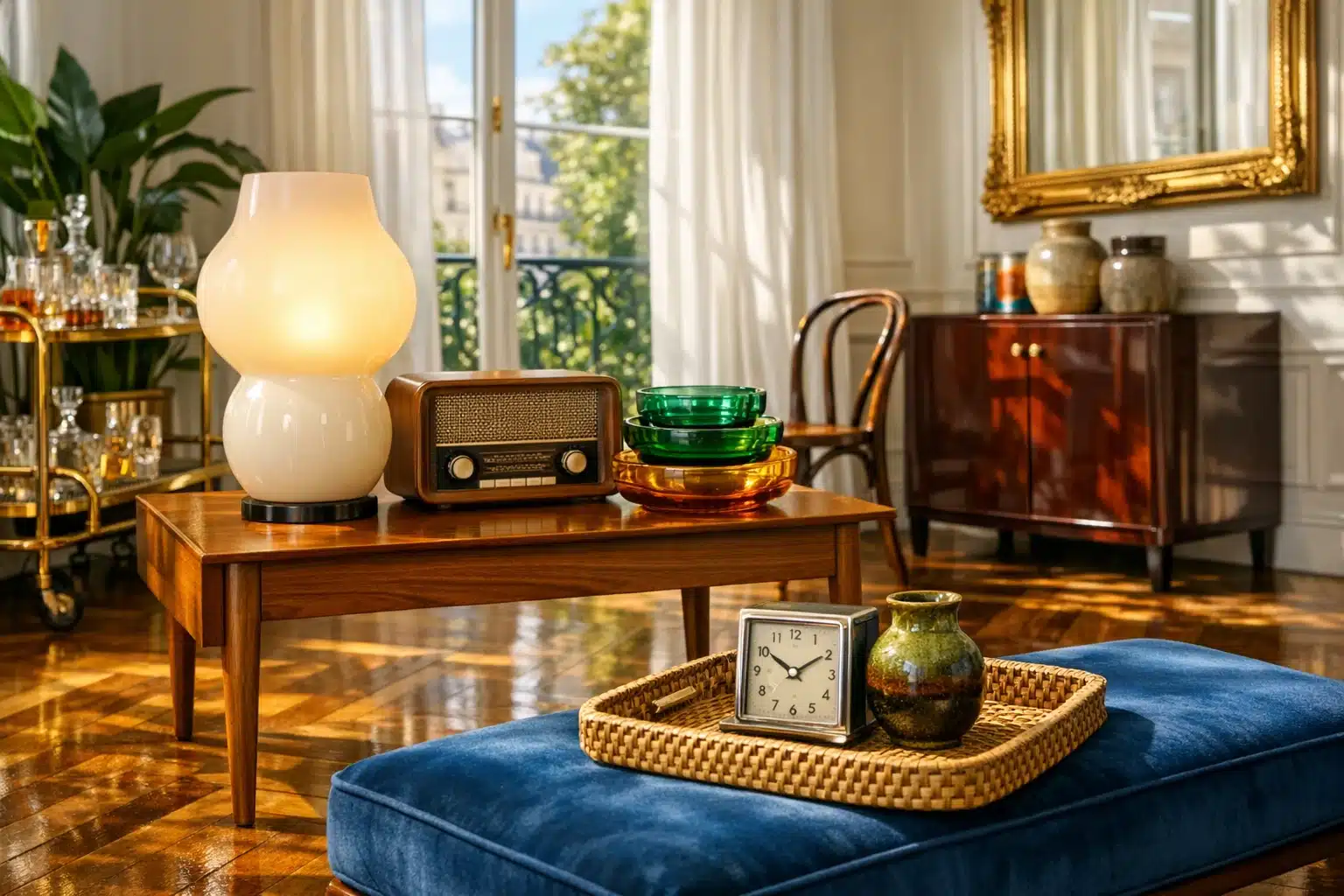
Lighting is another steady area of interest. Mid-century table lamps, opaline glass shades, brass floor lamps, industrial workshop lights, and ceramic lamp bases often appeal to buyers who want older character in modern rooms. The reason is simple: lighting performs a practical job while also shaping atmosphere. A vintage lamp can be decorative, useful, and easier to place in a home than a large wardrobe or dining table. Original wiring does not always add value, but original shades, switches, and metal finishes often matter. Buyers usually prefer pieces that have been safely rewired without losing their period look.
Furniture deserves careful attention, though size changes everything. Massive brown dining sets from the late nineteenth century may be harder to sell because many homes now have less space. By contrast, smaller forms such as teak side tables, utility stools, bentwood chairs, sewing cabinets, bar carts, and modular shelving are often easier to move and easier to love. Styles linked to Art Deco, mid-century modern, Scandinavian design, and certain industrial aesthetics continue to receive attention because they suit contemporary interiors.
Decorative storage pieces also perform well. Apothecary jars, enamel bread bins, labeled canisters, old trunks, and workshop drawers can cross from household object to design statement. Collectors and decorators both compete for them, which helps support prices.
Five household areas are worth checking first:
• kitchen and pantry pieces
• lamps and shades
• small furniture and seating
• storage containers and utility wares
• clocks, mirrors, and framed decorative objects
The core lesson is that value often sits where use and style meet. An object that is handsome, well-made, and still practical has a stronger chance of finding a buyer than something merely old. That does not mean every vintage item is expensive, but it does explain why certain domestic pieces continue to circulate through auctions, fairs, design shops, and online marketplaces with surprising energy.
What Collectors Are Chasing Right Now
Collector demand shifts with taste, media exposure, and generational nostalgia, yet some patterns remain surprisingly durable. Un aperçu des anciens objets de maison que les collectionneurs recherchent encore, avec un focus sur le design vintage et l’intérêt historique. That idea captures the modern market well, because buyers increasingly want objects that look striking in a room and carry a visible connection to a specific era. They are not only buying things; they are buying evidence of how people lived, decorated, cooked, entertained, and organized daily life.
Ceramics and glass remain major categories. Art pottery, pressed glass, colored depression glass, Scandinavian glassware, studio ceramics, and well-known mid-century dinnerware lines can all attract interest. What makes them appealing is the combination of shelf presence and collectibility. A single vase can be used as décor, while a full dinner service tells a larger story about manufacturing, taste, and domestic rituals. Buyers also like categories that reward research. Marks, pattern names, production dates, and color variations create a treasure-hunt effect that keeps the market lively.
Advertising items are another strong area. Old tins, enamel signs, branded thermometers, packaging, and grocery store displays speak to both history and design. Even modest pieces can do well when typography, color, and subject matter feel vivid. The same is true for paper collectibles such as postcards, old labels, recipe booklets, and printed ephemera. Because paper is fragile, survival rates are lower, which can make excellent examples more desirable than common metal or ceramic pieces.
Smaller household-related collectibles are especially popular with newer buyers. Vintage cameras, radios, telephones, costume jewelry boxes, sewing tools, tabletop clocks, and barware fit apartments, shelves, and social-media-friendly displays. This matters. Oversized objects once dominated antiques shops, but online selling has encouraged interest in things that can be photographed well, packed safely, and shipped at manageable cost.
Several forces shape current demand:
• nostalgia tied to childhood memories and family homes
• decorating trends influenced by mid-century and eclectic interiors
• limited production runs, unusual colors, or discontinued patterns
• maker reputation, designer attribution, and documented provenance
• the convenience of collecting objects that are compact and displayable
As a result, the most sought-after collectible is not always the oldest or the grandest. Often it is the piece that balances beauty, condition, portability, and a clear identity. A beautifully glazed bowl with a known pattern may outshine a large but anonymous cabinet. In this market, charm is not enough by itself, but charm combined with recognizability can travel very far.
How to Identify Antiques in Your Own Home
Identifying antiques at home begins with a useful definition. In many traditional contexts, an antique is at least one hundred years old, while vintage usually refers to items old enough to reflect a past era but not old enough to qualify as antiques. That distinction matters because people regularly label mid-century goods as antiques when they are better described as vintage collectibles. Both can carry value, but accurate terms help you research properly and speak clearly with dealers, auctioneers, and buyers.
Start with construction details. Furniture can reveal age through joinery, nail types, screw forms, saw marks, and wood choice. Hand-cut dovetails often suggest earlier workmanship than machine-made joints, though they are not proof on their own. Hand-forged nails generally predate machine-made wire nails, and slotted screws are older than Phillips-head screws, which became common in the twentieth century. The back and underside of an object often tell the truth more clearly than the polished front.
Materials also offer strong hints. Solid wood boards with shrinkage, old glass with slight imperfections, hand-painted decoration, weighty metal hardware, natural patina, and surface wear in places where human hands actually touched the object can all support age. By contrast, perfectly uniform distressing, synthetic finishes pretending to look old, and reproduction labels deserve caution. A piece can be charming without being ancient, so the goal is not romance but evidence.
Maker’s marks are often the fastest route to identification. Turn over ceramics and glassware. Open drawers and inspect the backs of cabinets. Look inside lids, along metal rims, and under removable parts. You may find:
• factory stamps
• impressed symbols
• handwritten numbers
• paper labels
• registration marks or hallmarks
Once you have a mark, compare it against museum databases, collector guides, auction archives, and reputable dealer catalogues. Pattern books and completed online sales can also help, provided you compare similar condition and not just asking prices. When no mark appears, style, technique, and wear patterns become more important. In that case, take detailed photos in daylight, measure carefully, and note every repair, crack, replacement, and missing element.
A final rule saves many people from costly mistakes: never clean aggressively before you know what you have. Scrubbing silver plate, sanding wood, repainting metal, or bleaching textiles can remove the very features collectors value. Dust can be removed; history cannot be put back. The quiet discipline of observation usually adds more value than the urge to make everything look new.
A Practical Conclusion for Curious Homeowners
Once you suspect an item may have value, the smartest next step is documentation rather than immediate sale. Write down dimensions, materials, visible marks, and any family history attached to the piece. Clear provenance does not have to mean royal ownership or a dramatic estate story. Even a note that an object came from a particular shop, city, or relative can help place it in context. Good photographs matter too: front, back, underside, close-up details, damage, labels, and distinguishing features should all be recorded before the object moves anywhere.
After that, decide what kind of value you are dealing with. There is sentimental value, decorative value, retail value, auction value, and resale value to a dealer, and these numbers are rarely the same. A shop may price a lamp at three hundred dollars, a dealer may offer one hundred and fifty, and an auction result may land somewhere in between depending on timing and competition. This is normal, not suspicious. Markets reward context, audience, and presentation.
For higher-potential pieces, professional advice is worth considering. A qualified appraiser, a specialist auction house, or a respected dealer can often identify details that general searches miss. This is especially useful for silver, fine ceramics, clocks, artwork, early furniture, unusual glass, and designer pieces. Still, not every item needs a formal appraisal. If a common object shows moderate interest online and comparable examples are easy to find, careful self-research may be enough for a practical decision.
Before selling or storing anything, remember a few basics:
• keep original parts, boxes, lids, and paperwork together
• avoid harsh restoration unless expert advice recommends it
• store textiles flat or in breathable materials
• protect fragile surfaces from sunlight and damp
• compare sold prices, not optimistic listings alone
For homeowners, inheritors, casual collectors, and weekend declutterers, the main lesson is reassuring. You do not need a grand estate to discover something worthwhile. Valuable objects often survive precisely because they were useful, sturdy, and loved in ordinary homes. A bread bin, a radio, a stack of dishes, or a modest side table may carry more significance than its daily appearance suggests. Look closely, research patiently, and let evidence guide your excitement. The best finds are not always dramatic; sometimes they are simply waiting in the cupboard for someone attentive enough to notice.