These Are the Premium Thongs People Are Choosing This Season
Choosing thong underwear used to feel like a trade-off between a polished look and all-day comfort, but that is no longer the case. Better fabrics, smarter seam placement, and more thoughtful cuts have turned premium thongs into practical essentials for work, travel, and relaxed weekends alike. Whether you prefer breathable cotton, sleek microfiber, or soft lace accents, the right pair can disappear under clothing without feeling forgettable. This guide breaks down what matters most before you buy.
Below is a clear outline followed by a detailed discussion of materials, fit, style, wardrobe use, and smart shopping considerations.
Outline
- An overview of premium thongs, highlighting materials, comfort features, design styles, and everyday wear options.
- What separates premium construction from ordinary basics.
- How comfortable thong underwear is designed for real, extended wear.
- Why stylish thong designs now include minimalist, sporty, lace, and high-rise options.
- How to match thong styles to clothing, routine, climate, and care habits.
- What shoppers should compare before buying, from fabric content to long-term value.
What Makes a Premium Thong Truly Premium
The word premium gets used often in fashion, sometimes so casually that it starts to lose meaning. In the world of thong underwear, however, it usually points to several concrete differences: fabric quality, precision in construction, better stretch recovery, and finishing details that make the garment easier to wear for long hours. A premium thong is not simply a thinner piece of fabric with a higher price tag. It is a product designed to perform quietly and consistently, which is exactly what good underwear should do.
Material is usually the first dividing line. Lower-cost thongs often rely on basic synthetic blends that can feel slick at first but lose their shape after repeated washing. Premium versions tend to use better fibers and more balanced blends. Common examples include:
- Pima or Supima-style cotton for softness and durability
- Modal or Tencel blends for a smooth hand-feel and breathability
- Microfiber with measured elastane content for stretch and shape retention
- Refined lace with softer edges and less scratchiness than cheaper lace trims
Construction matters just as much. Flat seams, bonded edges, and thoughtfully placed elastic can make a major difference in how a thong sits against the skin. Inexpensive pairs often bunch, twist, or leave sharper pressure lines because corners were cut in the manufacturing stage. Premium options usually distribute tension more evenly, which helps the fabric stay stable instead of shifting every time the wearer walks, sits, or bends. A cotton-lined gusset is another practical sign of quality, especially for everyday wear.
Design is part of the premium equation too. Not every elevated thong is ornate or decorative. Some of the best-made pieces are visually simple, with clean edges, muted tones, and a precise cut that works under fitted clothing. Others lean into lace, mesh overlays, scalloped waistlines, or satin-like finishes. The common thread is intention. The stitching is smoother, the waistband is more balanced, and the silhouette feels considered rather than rushed.
Price also reflects longevity. A premium thong may cost more upfront, but if it keeps its elasticity, comfort, and shape after many wash cycles, the cost per wear can be lower than repeatedly replacing cheaper pairs. That is why shoppers increasingly treat these garments less like disposable basics and more like small but important wardrobe tools. The fabric may be light, but the design work behind a strong pair is anything but insubstantial.
Comfortable Thong Underwear: The Features That Matter in Daily Life
Comfortable thong underwear is no longer a niche request. It is now a standard expectation, and for good reason. People want underwear that stays invisible under clothing without becoming a distraction by midday. The most comfortable pairs achieve that through engineering rather than luck. They consider body movement, fabric temperature, waistband pressure, and how seams behave after hours of wear. In other words, comfort is built, not guessed.
Fit starts with proportion. A thong that is too small tends to pull at the waistband and shift throughout the day. One that is too large may wrinkle, fold, or fail to stay in place. Premium brands often invest more care in grading between sizes, which is the process of adjusting pattern dimensions consistently across the size range. That means the difference between sizes is not simply more fabric, but a better balance in width, rise, and stretch. This is especially important because thong comfort depends on tension control. Even a few millimeters in the wrong place can change how a pair feels.
Fabric choice shapes the experience in different settings. Cotton-rich thongs are often preferred for long, routine days because they allow airflow and feel familiar against the skin. Microfiber blends are popular under smooth skirts, body-skimming dresses, or lightweight trousers because they create fewer visible lines. Modal is a favorite for people who want softness with a draped, almost second-skin effect. In many cases, comfortable designs include a moderate elastane percentage, often somewhere in the single to low double digits, to provide stretch without making the garment overly tight.
Several design details repeatedly show up in well-reviewed pairs:
- Tag-free interiors that reduce rubbing
- Laser-cut or bonded edges for a cleaner finish
- Soft waistbands that grip without pinching
- Cotton gussets for breathability and day-to-day practicality
- Seams positioned away from common pressure points
It is also worth noting that not every comfortable thong feels the same. Some people prefer barely-there microfiber that glides under clothing. Others want a slightly more substantial cotton build that feels anchored and dependable. That difference is not a flaw in the category; it reflects how varied bodies and routines are. A pair that feels perfect under tailored workwear may not be the one someone reaches for on a long travel day or a humid afternoon.
Perhaps the clearest sign of comfort is forgettability. The best thong underwear does not demand constant adjustment or inspire the wearer to count the hours until getting home. It simply does its job. That subtle success is why comfort has become the center of the conversation, not an afterthought hidden behind pretty packaging.
Stylish Thong Designs and Why They Matter Beyond Looks
Style in underwear is often misunderstood as something extra, as if appearance and performance belong to different worlds. In reality, stylish thong designs frequently improve function because the cut, trim, and finish determine how the garment behaves under clothing. A well-designed thong can flatter the body, support a cleaner silhouette, and align with the mood of the wardrobe built around it. Style is not always decoration; sometimes it is strategy.
Modern thong design has moved well beyond the old binary of plain versus lacy. Shoppers now see a much wider spectrum, including minimal seamless cuts, high-rise thongs, sport-inspired styles, ribbed knit options, mesh-panel designs, and vintage-influenced silhouettes with clean, sculpted waistlines. Each type suits a different preference. Minimalist pairs often work best under close-fitting garments because they prioritize invisibility. Lace-forward styles can add texture and personality without necessarily sacrificing comfort if the lace is soft and the edge finishing is done well. High-rise thongs are increasingly popular because they align with high-waisted trousers and skirts, creating a more integrated, balanced feel.
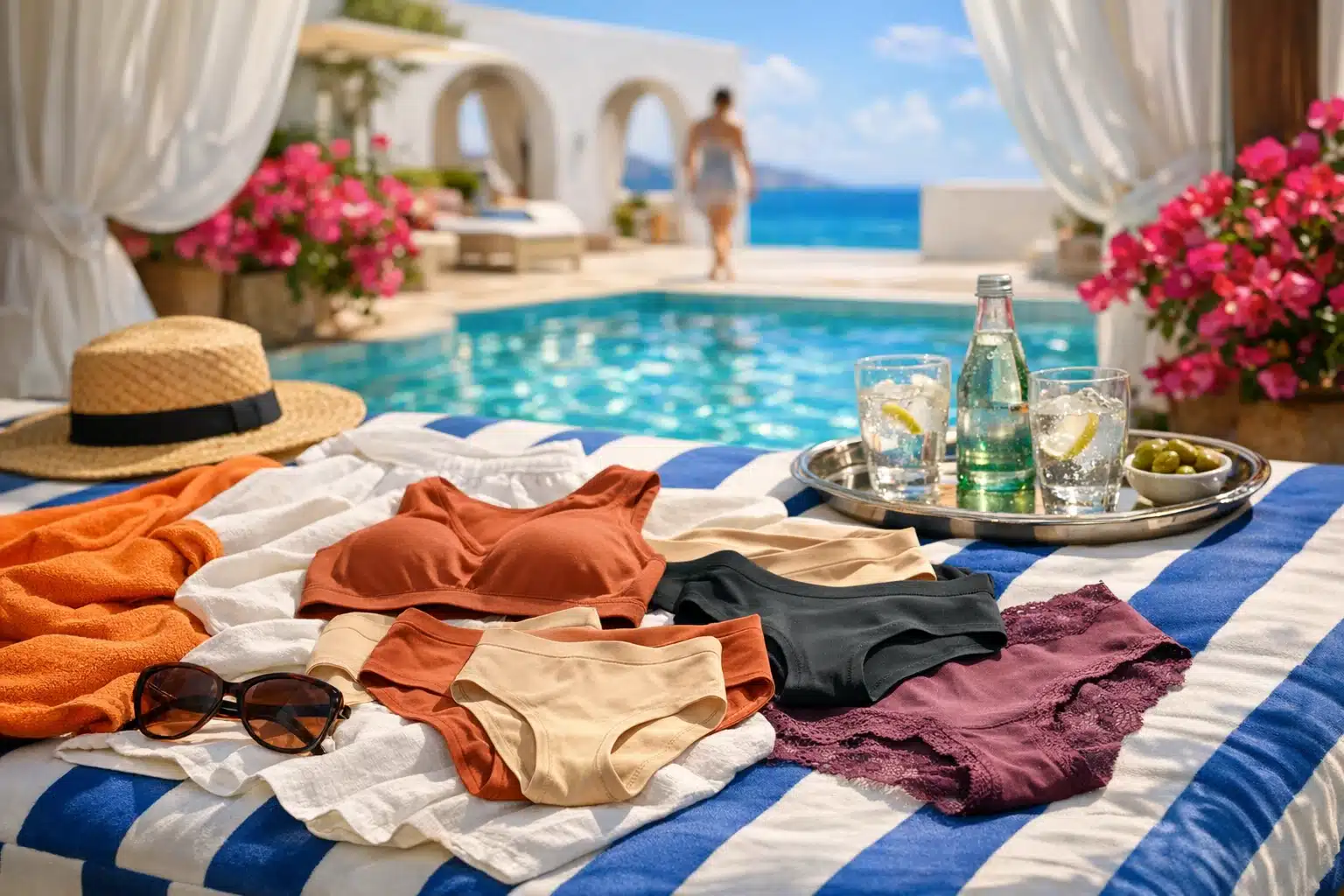
Color plays a larger role than many people expect. Neutrals such as black, cocoa, sand, and soft rose remain popular because they are versatile and discreet under everyday clothing. At the same time, seasonal palettes have expanded. Deep green, muted plum, mineral blue, and warm terracotta are frequently used in premium collections because they feel current without becoming impractical. Stylish design, in this sense, often means subtle sophistication rather than loud novelty.
Some of the most common design directions this season include:
- Clean-edge microfiber for no-show dressing
- Stretch lace with flatter scalloped trims
- High-leg cuts that visually lengthen the line of the hip
- Sporty waistbands that bring a modern, casual note
- Textured fabrics such as ribbed modal or soft mesh layering
Details matter enormously here. A V-front can change how a thong sits under low-rise denim. A wider waistband can make the garment feel more secure and create a smoother transition under lightweight trousers. Slight ruching, panel placement, and fabric contrast can all affect both comfort and appearance. The best designs do not shout for attention; they refine the experience.
There is also an emotional dimension to style. Clothing worn closest to the body often sets the tone for the day, even when nobody else sees it. Some readers want a pair that feels quietly polished for work. Others want softness and elegance after hours. A stylish thong design can support both moods. It can be understated, playful, sleek, or classic. The real value lies in finding the version that fits the wearer’s wardrobe and personal rhythm, rather than chasing trends without context.
Everyday Wear Options: Matching the Right Thong to the Right Outfit
One reason premium thongs have become more relevant is simple: modern wardrobes demand flexibility. People move through very different environments in a single day, and underwear has to keep up. A pair that works beautifully under a fitted knit dress may not be the one best suited to relaxed denim, travel, or a long office day. Everyday wear options matter because comfort and appearance are shaped by context. The smartest shoppers do not look for one magical thong that does everything perfectly. They build a small rotation with distinct strengths.
For office clothing or tailored pieces, smooth microfiber and bonded-edge styles are often the safest choice. These pairs tend to reduce visible lines under trousers, skirts, and lightweight suiting fabrics. For denim days, many people prefer cotton or modal blends with a bit more structure. Jeans can be less forgiving than they seem, especially if the rise and waistband of the underwear do not align well with the cut of the pants. A premium cotton thong can feel more grounded and breathable during long, seated hours.
Travel introduces different priorities. Long flights, train journeys, or road trips often call for fabrics that breathe well and hold their shape without digging in. A soft modal blend or a cotton-rich pair is usually more versatile in those conditions than highly decorative lace. Lace, meanwhile, can be excellent for occasional styling under dresses, skirts, or evening clothing, especially when the edges are flat enough not to show through. The key is not to treat one fabric as universally superior, but to match it to the demands of the day.
A simple wardrobe-based approach can help:
- Under leggings or body-skimming dresses: seamless or laser-cut microfiber
- Under denim and casual trousers: cotton or modal blends with stable waistbands
- For warm climates: breathable fabrics with minimal heavy trim
- For special-event dressing: refined lace or satin-finish styles with soft edges
- For travel or long workdays: pairs with reliable stretch recovery and a cotton-lined gusset
It is also helpful to think about color strategy. Light clothing often pairs best with skin-tone shades rather than white, which can sometimes show more than expected under thin fabric. Dark neutrals are useful for daily rotation, while richer tones can add interest without becoming difficult to style. In this way, underwear selection starts to resemble any other practical part of dressing: function first, then refinement.
The best everyday thong options are the ones that disappear when needed and still feel like an intentional choice. They support the outfit rather than competing with it. That quiet reliability is often the difference between a drawer full of random pieces and one made up of genuine favorites.
How to Shop Smarter: Fit, Care, Value, and Long-Term Satisfaction
Buying premium thong underwear is easier when the process is treated like evaluation rather than impulse. Good design can be undermined by poor sizing, careless laundering, or buying for the wrong use case. A practical approach begins with a simple question: what do you actually need this pair to do? If the answer is all-day comfort, the best choice may not be the same one you would pick for seamless styling under a particular dress. Matching the purchase to the purpose immediately improves the odds of satisfaction.
Sizing deserves more attention than many shoppers give it. Underwear sizing varies widely across brands, and premium labels are no exception. A medium in one line may fit like a small in another if the fabric has less stretch or the pattern has a lower rise. Checking the brand’s size chart, fabric composition, and customer notes can prevent disappointment. If a product description mentions firm compression, limited stretch lace, or a very minimal back cut, that information is not decorative language. It is a clue about how the pair will behave on the body.
Here is a useful checklist before purchasing:
- Read the fiber content, not just the marketing headline
- Look for care instructions that match your routine
- Check whether the gusset is cotton-lined
- Consider how the rise works with your usual trousers and skirts
- Think about cost per wear rather than price alone
- Review return rules, especially for multi-packs or final-sale items
Care is another major factor in long-term value. Delicate lace and soft microfiber can last well when washed gently, but they can lose elasticity faster if exposed to high heat or rough cycles. Many premium pairs benefit from cool washing, mesh laundry bags, and air drying. That may sound fussy, yet it often extends the life of the garment enough to justify the small extra effort. Cotton and modal blends are generally easier to maintain, though they also benefit from gentler care if you want the waistband and stretch fibers to stay resilient.
Value is not always about owning the largest number of pairs. A smaller selection of thongs that each serve a clear purpose can be more useful than a crowded drawer filled with compromise purchases. One smooth no-show option, one breathable cotton favorite, one refined lace piece, and one travel-friendly pair may cover more real-life needs than a dozen inconsistent choices.
For readers shopping this season, the clearest strategy is to look past surface appeal and pay attention to construction, fabric behavior, and fit logic. A premium thong should earn its place through comfort, reliability, and design that works in the real world. When it does, it stops being a trivial accessory and becomes one of the most useful basics in the wardrobe.
Conclusion: For Shoppers Who Want Comfort Without Losing Style
If you are comparing premium thongs for the first time or replacing pairs that never quite worked, the most important takeaway is that quality shows up in the details. Better fabrics, more thoughtful construction, and smarter design choices can make thong underwear far more wearable than older assumptions suggest. Comfortable thong underwear is not a contradiction, and stylish thong designs do not have to sacrifice practicality to look refined. For shoppers who want fewer wardrobe frustrations and better daily basics, choosing with purpose will almost always lead to a better drawer and a better wearing experience.