These Are the Birthstone Bracelets People Are Choosing This Season
Birthstone bracelets sit at an appealing crossroads: they carry private meaning, add color without overwhelming an outfit, and feel easy to wear from morning coffee to late dinner plans. That blend of symbolism and practicality explains why they keep returning to jewelry conversations each season. Buyers are no longer selecting stones only by birth month, but also by milestone, family connection, and emotional resonance. Looking closely at current choices reveals how design, cut, comfort, and versatility now matter just as much as sentiment.
Outline: This article begins with the leading bracelet trends of the season and the reasons they are connecting with shoppers. It then explores the meanings commonly associated with major birthstones, while noting that personal interpretation often matters as much as tradition. The third part compares gemstone cuts and construction details that influence appearance, durability, and price. The fourth section focuses on bracelet styles that work in daily life, and the fifth offers a practical conclusion for readers choosing a piece for themselves or for someone important.
Seasonal Trends: What People Are Wearing Now
This season’s interest in birthstone bracelets is shaped by a clear shift toward jewelry that feels personal without becoming formal or fussy. Many shoppers are choosing designs that can move easily between different settings: work, casual weekends, travel, celebrations, and gift occasions. Instead of oversized statement pieces, the stronger movement leans toward refined bracelets with a single focal stone, a small cluster, or a row of delicate accents. These designs feel current because they acknowledge how most people actually dress now, which is to say in layers, in mixed textures, and with an eye toward pieces that can be worn repeatedly rather than saved for rare events.
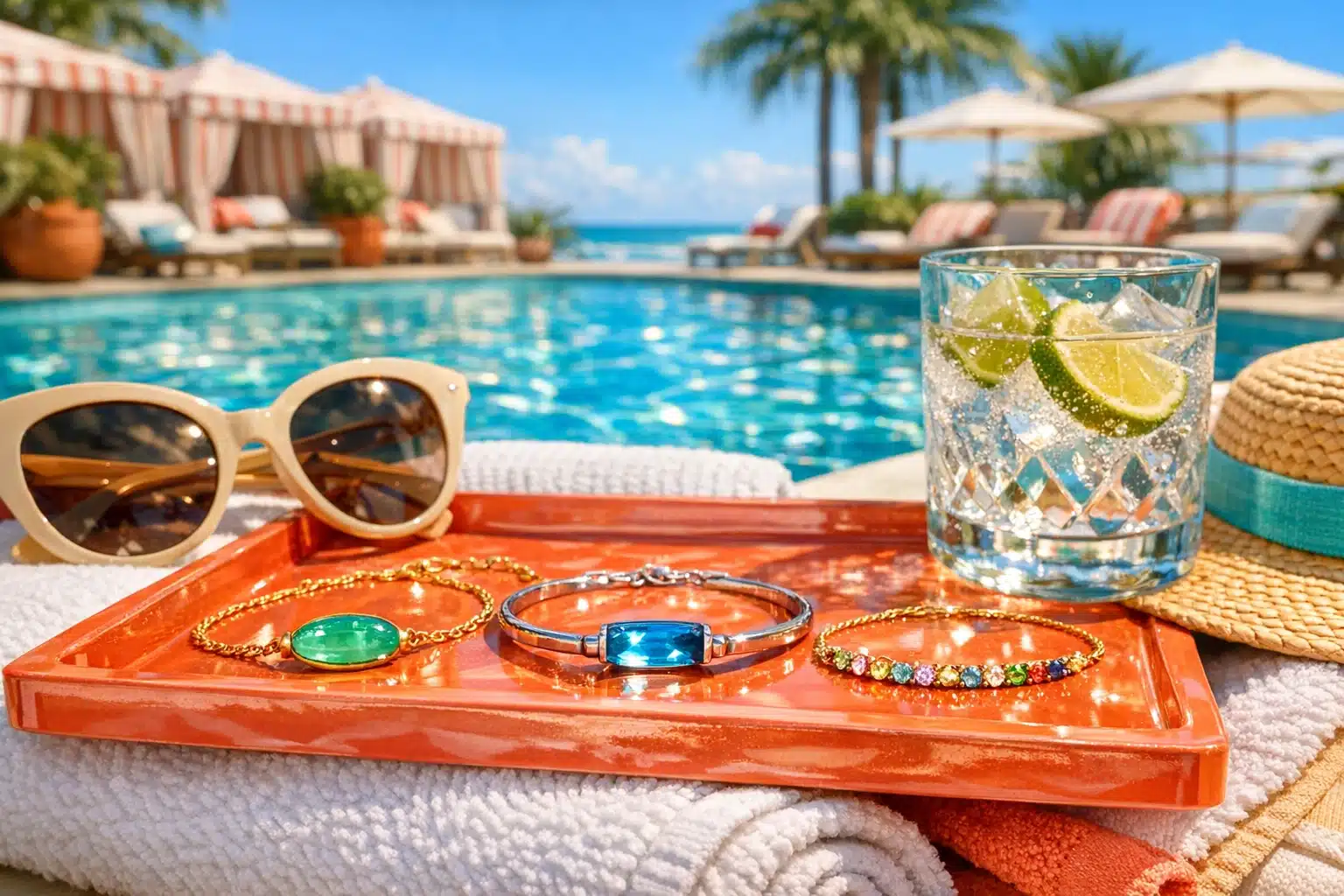
An overview of birthstone bracelets people are choosing this season, focusing on symbolic meaning, gemstone cuts, and versatility.
Within that broad direction, several visual patterns stand out. Bezel settings are especially popular because they protect the stone, create a neat outline, and suit both modern and classic wardrobes. Oval, pear, and baguette cuts are appearing more often than bulky traditional rounds, partly because they look elegant in smaller sizes and partly because they sit flatter on the wrist. Adjustable chains are another strong preference. They solve a practical problem, make gifting easier, and allow the bracelet to be worn alone or stacked with watches and bangles. Yellow gold still has plenty of appeal, but white metals and mixed-metal combinations are increasingly visible, especially for buyers who want a bracelet that works with the rest of an existing jewelry collection.
Shoppers are also responding to the emotional flexibility of these pieces. A bracelet set with one’s own birthstone remains a classic choice, yet there is growing interest in family combinations, partner stones, and bracelets that mark a particular year or turning point instead of a birthday. That wider use gives the category more depth. A mother may wear several stones to represent children. A graduate may choose a gem associated with clarity or resilience. Someone updating a daily jewelry wardrobe may simply select a color that flatters the skin and feels meaningful on a personal level.
Several trend details are worth noticing:
• Slim chains with one suspended gemstone are favored for understated wear.
• East-west stone settings create a slightly fresher profile than vertical arrangements.
• Tiny bar bracelets with multiple birthstones appeal to gift buyers with families.
• Softer hues such as aquamarine, amethyst, and peridot are gaining attention for spring and summer styling.
• Richer tones like garnet, sapphire, and ruby remain strong for autumn and winter wardrobes.
The common thread is not excess. It is intention. People want jewelry that tells a story quietly, looks polished in daylight, and still feels natural at the end of a long day. That is why the strongest seasonal choices are not necessarily the most ornate ones. They are the bracelets that combine sentiment with ease.
The Meaning Behind Birthstone Gemstones
The appeal of a birthstone bracelet deepens when the gemstone carries an association that resonates with the wearer. These meanings are not scientific rules, and they have changed across cultures, religions, and jewelry traditions over time. Still, symbolic language matters in jewelry because it helps people express affection, intention, memory, and identity in a compact form. A small gem on the wrist can represent a month of birth, but it can also stand for a quality someone wants to remember or cultivate.
January’s garnet is often linked with protection, loyalty, and grounded energy. Its deep red tone gives it a reassuring, steady character. February’s amethyst is widely associated with calm, reflection, and clarity, which helps explain why it is frequently chosen for thoughtful gifts. March’s aquamarine is connected with serenity and openness; its watery blue color naturally invites associations with ease and fresh starts. April is traditionally represented by diamond, a stone long tied to endurance and commitment, although white sapphire and white topaz are sometimes selected as alternatives when buyers want a similar bright effect at a different price point.
May’s emerald is commonly linked to renewal, growth, and affection, while June offers a more varied identity because pearl, moonstone, and alexandrite can all appear in birthstone traditions depending on the source. July’s ruby is associated with vitality, courage, and strong feeling, giving it a vivid presence even in small bracelets. August’s peridot often suggests optimism and lightness. September’s sapphire is tied to wisdom and sincerity. October’s opal and tourmaline bring a more playful symbolism, often connected with creativity, individuality, and emotional nuance. November’s citrine and topaz suggest warmth and abundance. December’s options, including turquoise, tanzanite, and zircon, are often linked with protection, communication, and insight.
These associations influence purchasing decisions in several ways:
• Gift buyers often choose the traditional month stone because it feels immediately legible and heartfelt.
• Self-purchasers may prioritize meaning over calendar accuracy, selecting a gem that reflects a chapter of life.
• Family jewelry often uses multiple stones to represent relationships rather than individual symbolism.
• Color preferences can reinforce emotional meaning, especially when someone already feels drawn to a certain hue.
What matters most is that symbolism remains flexible. A bracelet does not lose value because its meaning is personal rather than inherited from a printed chart. In fact, modern buyers often prefer that freedom. One person may see sapphire as a sign of loyalty, while another chooses it because it recalls a grandparent’s ring or the color of a meaningful place. Jewelry becomes more compelling when it can hold both public tradition and private memory. Birthstone bracelets succeed for precisely that reason: they offer a ready-made language, but leave enough room for an individual accent.
Gemstone Cuts, Settings, and Design Details That Change the Look
A birthstone can say one thing symbolically and something quite different visually depending on how it is cut and set. That is why two bracelets featuring the same gem may feel worlds apart. Cut affects brilliance, perceived size, and character. Setting affects security, style, and comfort. Chain structure influences how a bracelet drapes, stacks, and survives everyday use. For anyone comparing options, these design details are not minor technicalities; they are the reasons a piece feels either effortless or impractical after a week of wear.
Round cuts remain familiar because they maximize sparkle and suit nearly every metal tone, but they are no longer the default for buyers seeking a newer look. Oval stones can elongate the wrist visually and often make a gem appear larger than a round stone of the same weight. Pear cuts add movement and a slightly romantic profile. Baguette and emerald cuts provide a cleaner, more architectural feel, making them especially appealing in bracelets meant to read modern and understated. Cabochon stones, which have a smooth domed surface rather than faceted sparkle, are also worth noting. They bring softness, depth, and a tactile quality that works well with moonstone, opal, turquoise, and other gems appreciated for glow rather than flash.
Setting choice often determines whether a bracelet can function as daily jewelry. Prong settings expose more of the stone and can increase brilliance, but they may catch on knitwear or delicate fabrics if the design sits too high. Bezel settings wrap the stone in metal, offering a cleaner edge and better protection against knocks. Channel and bar settings can be excellent for bracelets with multiple stones because they create order and reduce snagging. If the piece is intended for constant wear, a lower profile usually proves more practical than a dramatic mount.
Buyers comparing designs should pay attention to these features:
• Adjustable sliders make fit easier and reduce the risk of a bracelet feeling too loose or too tight.
• Secure clasps matter as much as the stone, especially for gift pieces intended for regular use.
• Smaller accent gems often provide better everyday durability than one large exposed centerpiece.
• Flat links and smooth undersides improve comfort during typing, driving, and layering.
• Metal color changes the mood: yellow gold warms softer stones, while white metals sharpen cooler tones.
There is also a subtle design trend toward balance rather than perfection. Slightly asymmetrical placements, mixed stone sizes, and east-west orientations give familiar gems a different rhythm. A sapphire in a horizontal setting feels sleeker than the same stone placed vertically. A tiny emerald on a paperclip chain reads differently from a classic tennis-style arrangement. The gem may carry the meaning, but the cut and structure decide the voice. For that reason, the best bracelet is rarely the one with the largest stone. More often, it is the one where the design supports the wearer’s routine, wardrobe, and taste without asking for constant adjustment or special handling.
Everyday Wearable Bracelet Styles That Actually Fit Real Life
The phrase everyday jewelry can sound vague until you consider what a typical day actually includes: commuting, typing, carrying bags, washing hands, layering sleeves, and shifting from indoor meetings to outdoor errands. A bracelet that works in those conditions needs more than visual appeal. It must sit comfortably, resist constant snagging, and look appropriate across different outfits. That is why the most successful birthstone bracelet styles are not always the most ornate. They are the ones designed with movement and repetition in mind.
Fine chain bracelets with a single stone remain one of the most reliable choices for daily wear. They are light, easy to stack, and simple to pair with studs, necklaces, or a watch. Station bracelets, which place small stones at intervals along the chain, offer a little more detail without becoming heavy. Bar bracelets featuring one or several birthstones work well for people who prefer clean lines and a modern profile. Beaded gemstone bracelets can feel softer and more casual, though the overall effect depends on bead size and the quality of the stringing. Cuff styles offer structure and can be convenient for quick wear, but they should be chosen carefully if the wearer types frequently or prefers sleeves with narrow cuffs.
Everyday wearability also depends on styling habits. Someone who stacks several bracelets may want slimmer pieces that do not compete for space. A person who wears only one bracelet at a time may prefer a slightly bolder center stone or a more distinctive chain. Lifestyle matters too. Parents of small children often choose smoother settings. Travelers may prefer secure clasps and low-profile stones. Office wearers frequently lean toward designs that flash subtly rather than demand attention under bright lighting.
Practical style options worth considering include:
• Minimal chain plus one birthstone for a clean, versatile look.
• Multi-stone family bracelet for sentimental daily wear.
• Tennis-inspired line bracelet with small stones for a polished finish.
• Cord or adjustable woven style for a relaxed, casual wardrobe.
• Paperclip or elongated-link chain for a contemporary layered effect.
Color coordination makes a difference as well. Cooler stones like aquamarine, sapphire, and tanzanite often sit naturally alongside denim, gray tailoring, and silver-toned accessories. Warmer stones such as citrine, garnet, and ruby can add life to cream knits, brown leather, and gold jewelry. Green stones like emerald and peridot work surprisingly well as all-season accents because they act almost like neutral color notes when used sparingly.
The most wearable bracelet is not defined only by durability or trend relevance. It is the piece a person reaches for without hesitation. If it feels balanced on the wrist, aligns with everyday clothing, and carries a meaning that still feels alive after the novelty fades, it earns its place. That is the quiet strength of a well-chosen birthstone bracelet: it becomes part of how someone gets dressed, not just part of what they own.
Conclusion for Shoppers, Gift Buyers, and Everyday Jewelry Lovers
For readers trying to choose the right birthstone bracelet this season, the key is to think beyond the calendar and toward a fuller picture of use, symbolism, and design. A bracelet can honor a birth month, but it can also mark a family story, celebrate a turning point, or simply bring a favorite color into daily life in a meaningful way. The strongest choices tend to combine three qualities at once: a gem with personal resonance, a setting suited to regular wear, and a style that fits naturally into the wearer’s wardrobe. When those elements line up, the bracelet feels less like an occasional accessory and more like a small companion.
Gift buyers should begin with the wearer’s habits rather than assumptions about sentiment alone. If the recipient prefers understated jewelry, a slim chain with a bezel-set stone is likely to feel thoughtful and easy. If they enjoy layering, a lighter station bracelet or bar design may work better than a chunkier piece. If family connection is central, multiple stones can create a richer story than one gem by itself. These details matter because a well-intended gift only becomes successful when it is genuinely worn.
Self-purchasers can be more adventurous, but practicality still deserves attention. Ask a few useful questions:
• Will this bracelet sit comfortably through daily tasks?
• Does the clasp feel secure and easy to manage?
• Is the stone cut beautiful in the size I can realistically wear often?
• Will the metal tone work with what I already own?
• Am I choosing this for symbolism, color, versatility, or a mix of all three?
There is no single correct answer because the appeal of birthstone jewelry lies in how adaptable it has become. Some people want a clean, nearly invisible bracelet with quiet significance. Others want a brighter piece that catches the eye and starts conversations. Both approaches are valid. What matters is clarity of purpose. Jewelry tends to disappoint when it is bought only for trend value and not for real-life compatibility.
For anyone browsing seasonal collections now, the encouraging news is that the market offers more nuance than it once did. There are refined everyday options, thoughtful gift designs, varied gemstone cuts, and meaningful customization choices without requiring excess or theatrical styling. If you choose with attention to comfort, symbolism, and visual balance, a birthstone bracelet can become one of the easiest pieces to wear and one of the hardest to replace. That combination of usefulness and personal meaning is exactly why this category continues to resonate.