 Artificially generated image
 5 Old Household Items That Are Worth Money Today
1. Why Everyday Household Objects Can Become Valuable Collectibles
Open a kitchen cabinet, pull out a heavy pan, or glance at an old lamp in the hallway, and you might be looking at an object collectors actively want. Many valuable vintage household items were made for daily use, which is why they often survive in ordinary homes rather than museums. Their worth usually comes from craftsmanship, maker history, scarcity, and condition instead of age by itself. Learning what to notice can turn a routine cleanout into a smart first step toward identifying a genuine antique.
An overview of old household items collectors still seek, highlighting vintage design and historical value.
Before looking at specific categories, it helps to understand why one old object sells quickly while another stays unsold at a yard sale. Collectors typically weigh several factors at once. Age matters, but not as much as many people assume. A mass-produced bowl from the 1980s may bring little interest, while a well-preserved item from the 1940s with a desirable pattern can attract serious buyers. Maker marks, original hardware, limited production runs, and regional styles all influence demand. Condition also plays a major role. Chips, deep scratches, missing parts, and refinishing can lower value, while untouched surfaces and complete sets often improve it.
This article follows a practical outline. First, it explains why common household goods became collectible. Next, it looks at vintage kitchen items. Then it moves into dining and display pieces, followed by furniture, lighting, and home décor. Finally, it shows how to identify valuable antiques at home without relying on guesswork.
- Collectors often pay more for recognizable makers than for similar unmarked pieces.
- Original condition usually matters more than aggressive cleaning or repairs.
- Styles come in cycles, so demand for mid-century, Art Deco, or farmhouse items can rise over time.
- Complete sets, matching lids, and intact labels can make a noticeable difference.
There is also a simple truth worth remembering: not every old object is valuable, but many overlooked ones are. The attic can behave like a time capsule, preserving objects that once seemed too ordinary to matter. Inherited homes are especially rich in clues because families often keep practical goods for generations. A cast-iron skillet, a stack of patterned bowls, or a side table with a forgotten maker label may tell a larger story about design trends, manufacturing history, and consumer life in its era. That historical connection is part of the appeal. People are not always buying just a thing; they are buying the workmanship, the period style, and the sense that the object has already lived a useful life.
2. Vintage Kitchen Items That Still Draw Collector Interest
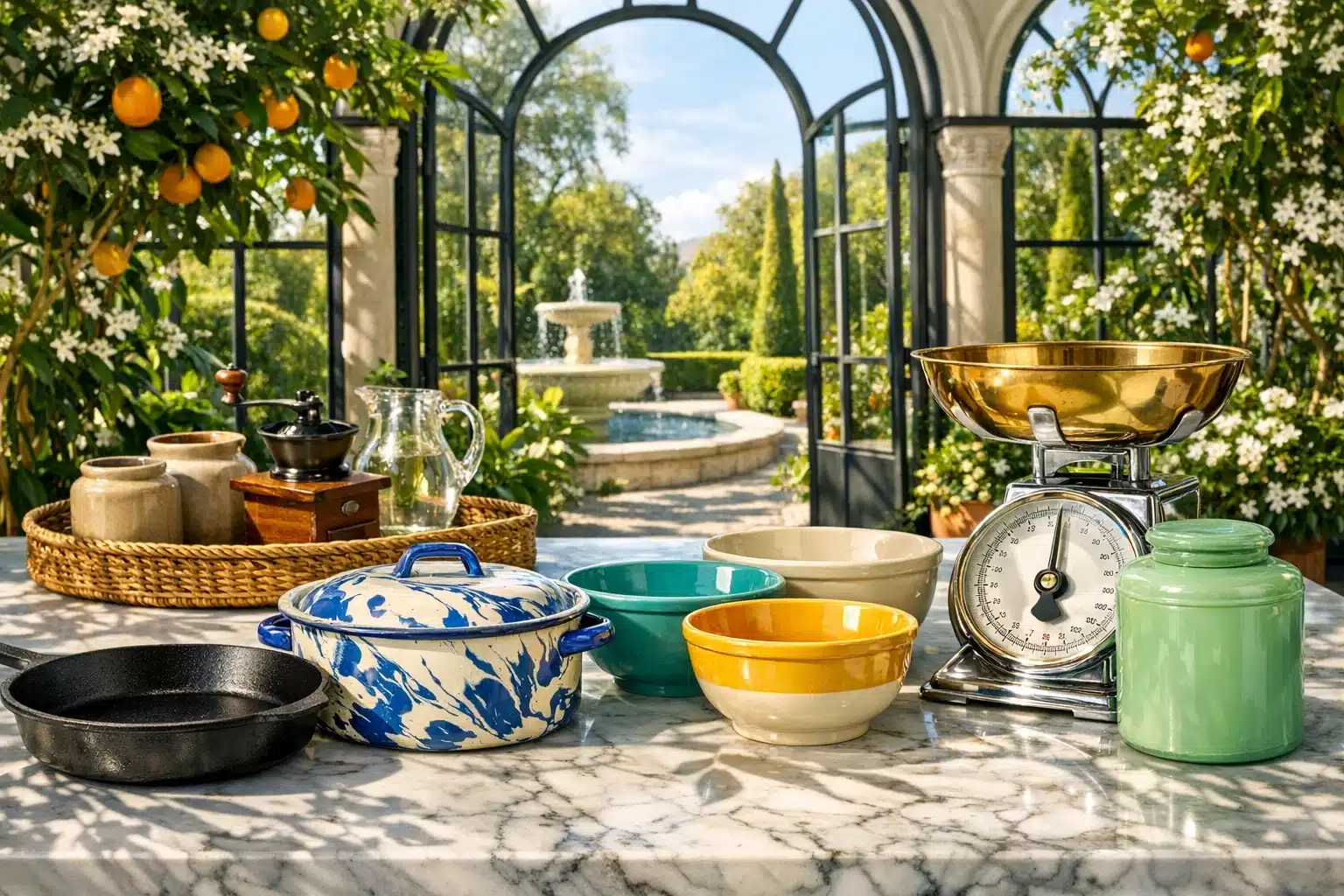
The kitchen is one of the best places to begin a home search because useful objects were often built to last. Some of the most collectible pieces are also the most familiar: cast-iron cookware, enamelware, mixing bowls, early small appliances, and pressed or colored glass used for serving. These items were made in huge numbers, yet certain brands, sizes, colors, and patterns remain highly sought after. The difference between a common pan and a desirable one may be as small as a heat ring, a logo placement, or a scarce lid that somehow stayed with the original pot.
Cast iron is a strong example. Collectors frequently look for older skillets and Dutch ovens from respected manufacturers because the metal was often smoothly finished and built for long use. Pieces with clear maker marks, rare sizes, and matching lids tend to perform better than anonymous examples. Condition matters here in a practical way. Light surface rust can often be addressed, but cracks, heavy pitting, or warped bases reduce appeal. Enamelware can also be collectible, especially when it carries classic marbled finishes, unusual colors, or earlier construction. However, chips around the rim or interior damage can affect both usability and value.
Glass and ceramic kitchenware bring a different kind of collector energy. Mid-century mixing bowls, refrigerator dishes, and ovenware in recognizable patterns are popular because they combine nostalgia with design appeal. Certain colors, promotional releases, and discontinued patterns draw more attention than plain production pieces. The same is true for jadeite-style kitchenware and older stoneware crocks, where maker stamps, size, and decoration all matter. Even manual kitchen tools such as coffee grinders, scales, sifters, and hand mixers can be collectible when they remain complete and clean.
- Check the bottom, handle, or lid for stamped marks, impressed numbers, or etched logos.
- Keep matching pieces together, since sets often sell better than separated items.
- Avoid harsh scrubbing that removes decals, seasoning, or original surface character.
- Note unusual colors, promotional patterns, and uncommon sizes during research.
One useful comparison is this: a plain, later-era casserole dish may have mostly decorative value, while a rarer version in a distinctive pattern can attract committed collectors. Likewise, a worn unmarked skillet may be useful in the kitchen, but a clean, clearly identified example from a respected maker can interest both cooks and antique buyers. The kitchen rewards patience because its contents are deceptively ordinary. What looks like a shelf of old tools can actually be a small archive of industrial design, domestic history, and changing taste. If you are wondering where to start, this room often offers the easiest first lessons in how collectible home antiques reveal themselves.
3. Silver, China, Glassware, and Table Pieces Worth a Closer Look
Dining rooms, buffets, and china cabinets often hold some of the most misunderstood antiques in a house. Many people assume every silver tray or porcelain plate is valuable, while others dismiss whole cupboards as outdated. The truth sits in the middle. Some table pieces are common and mainly sentimental, yet others are strongly collectible because of material, craftsmanship, pattern scarcity, or maker reputation. Knowing how to separate sterling silver from silverplate, or hand-decorated porcelain from later mass-market dinnerware, can save time and prevent expensive mistakes.
Silver is a classic example. Sterling pieces usually carry hallmarks such as “sterling,” “925,” or maker symbols that identify the manufacturer and sometimes the place of origin. Silverplate, by contrast, has a base metal covered by a thin silver layer and generally sells for less unless the design is exceptional. Even so, silverplate should not be ignored. Large serving pieces, ornate tea sets, or unusual forms from recognized makers can still attract buyers. Weight, decoration, and completeness all matter. A tea service with its sugar bowl, creamer, and tray usually has more appeal than a single surviving pot.
Porcelain and china require a similar kind of close reading. The underside of a plate often gives away its story through stamps, pattern numbers, or country-of-origin marks. European porcelain factories, early American art pottery, and beautifully hand-painted cabinet plates can hold more interest than plain later sets produced in very large quantities. Condition is essential. Tiny rim chips, hairline cracks, and restoration lower value, while crisp gilding and strong color help preserve it. Pattern popularity also matters. Some florals stay modest, while bold mid-century motifs or elegant Art Deco shapes return to fashion with new buyers.
Glassware is equally varied. Depression glass, cut glass, carnival glass, and mid-century barware all have collector audiences, but rarity and condition separate the ordinary from the desirable. A single unusual cocktail shaker or a complete set of matching stemware may do better than a mismatched collection of everyday tumblers. Colored glass can be especially appealing when the hue was produced for a short time or tied to a known manufacturer.
- Inspect the base for hallmarks, etched signatures, and pattern names.
- Hold glassware to the light to spot chips, cloudiness, and repairs.
- Keep service pieces with their sets whenever possible.
- Photograph backstamps clearly before researching comparable sales.
There is a certain pleasure in opening a cabinet and realizing the shelf is not just full of dishes, but of design history. Table pieces record changing habits of entertaining, manufacturing, and taste. For collectors, that combination of beauty and context is exactly what turns old serving ware into something memorable.
4. Furniture, Lighting, and Decorative Home Antiques That Can Surprise You
Large objects are often overlooked because they seem too bulky, too worn, or too ordinary to be collectible. Yet furniture and lighting regularly rank among the most valuable antiques found at home, especially when they reflect a strong period style or a known maker. A chair tucked into a spare bedroom, a brass lamp with its original shade, or a walnut dresser with intact hardware may have more market interest than a box of smaller items. In many cases, the very features people once wanted to “update” are the ones collectors hope to find untouched.
Mid-century modern furniture remains one of the clearest examples. Clean lines, tapered legs, teak or walnut veneers, and practical scale continue to appeal to buyers who want both function and style. Pieces linked to known designers or established manufacturers can draw strong attention, but anonymous furniture from the same period may still carry value if the construction and design are solid. Earlier furniture can also matter. Victorian side tables, Arts and Crafts pieces, bentwood chairs, farmhouse cupboards, and well-made mirrors all have markets, though demand depends heavily on quality, size, and condition.
Lighting deserves special attention because original fixtures are frequently replaced and discarded. Table lamps, floor lamps, sconces, schoolhouse fixtures, and certain industrial lights can be collectible when they retain period features. Collectors check for original glass shades, switches, finials, cords, and bases, even if rewiring is needed for safety. Clocks and radios fall into a related category. Their value depends not only on whether they run, but also on cabinet style, dial design, maker, and completeness. A handsome nonworking mantel clock may still interest a buyer if the case is attractive and the movement is original.
Construction details often reveal whether furniture is truly old or simply styled to look old. Dovetail joints, wood shrinkage, tool marks, old screw types, and underside labels can all offer clues. At the same time, restoration choices matter. Over-sanding a tabletop, replacing brass pulls with modern hardware, or painting over old finishes can strip away character that collectors prefer to keep.
- Look beneath drawers, seats, and tabletops for labels, stamps, and pencil markings.
- Compare hardware wear with the rest of the piece to see if parts were changed.
- Measure furniture before researching, since size affects both rarity and demand.
- Do not assume a damaged cord or dusty finish means an item has no value.
A room full of older furniture can feel silent until you start noticing the details. Then the house begins speaking in design languages: Victorian ornament, machine-age metal, postwar simplicity, handmade joinery. That is why collectible home antiques are so compelling. They are not only useful objects but also readable records of the homes they once shaped.
5. Conclusion: How to Identify Valuable Antiques at Home Before You Sell, Donate, or Store Them Away
If you are trying to identify valuable antiques at home, the best approach is methodical rather than fast. Start by treating the process like documentation, not decluttering. Walk room by room and photograph objects from several angles, including the base, interior, back, or underside where marks usually hide. Write down measurements, materials, visible damage, and any family information connected to the piece. Even a simple note such as “came from grandmother’s dining room in the 1950s” can help later when comparing age and style. This first pass gives you a clearer view of what you own and prevents good items from disappearing into donation boxes too early.
Next, research with care. Look for maker names, patent dates, stamped numbers, hallmarks, and labels. Search sold listings rather than asking prices, because unsold items often create false expectations. Auction house archives, museum collections, collector clubs, and reference guides are also useful for confirming patterns and production periods. Be cautious with broad claims found on forums or social media. Many pieces are described as “rare” online when they are merely old. A better test is whether similar examples have actually sold, how often they appear, and whether buyers value the exact maker, color, size, or condition you have.
Condition should be judged honestly. Minor wear is normal for household antiques and can even support authenticity, but structural damage changes the picture. Chips, repairs, replacement parts, severe rust, rewiring needs, upholstery issues, or missing components all affect value. Just as important, avoid unnecessary cleaning. Polishing silver too aggressively, stripping wood, repainting metal, or scrubbing labels can lower interest. When in doubt, gentle dusting is safer than ambitious restoration.
- Photograph marks before cleaning anything.
- Group matching items into sets and keep lids, shades, and hardware with the original piece.
- Use completed sales data to understand real demand.
- Consult a qualified appraiser or specialist for potentially important objects.
For homeowners, heirs, downsizers, and curious collectors, the main lesson is simple: slow down and look closely. Valuable vintage household items often hide in plain sight because they were designed for ordinary life. A pan, lamp, bowl, or sideboard may not seem dramatic, yet it can hold design importance, maker recognition, and buyer interest all at once. You do not need to assume every old object is a treasure, but you also should not assume age equals junk. The smartest outcome usually comes from informed patience. By learning how collectors judge condition, rarity, and authenticity, you place yourself in a far better position to decide what to keep, what to research further, and what might genuinely be worth money today.