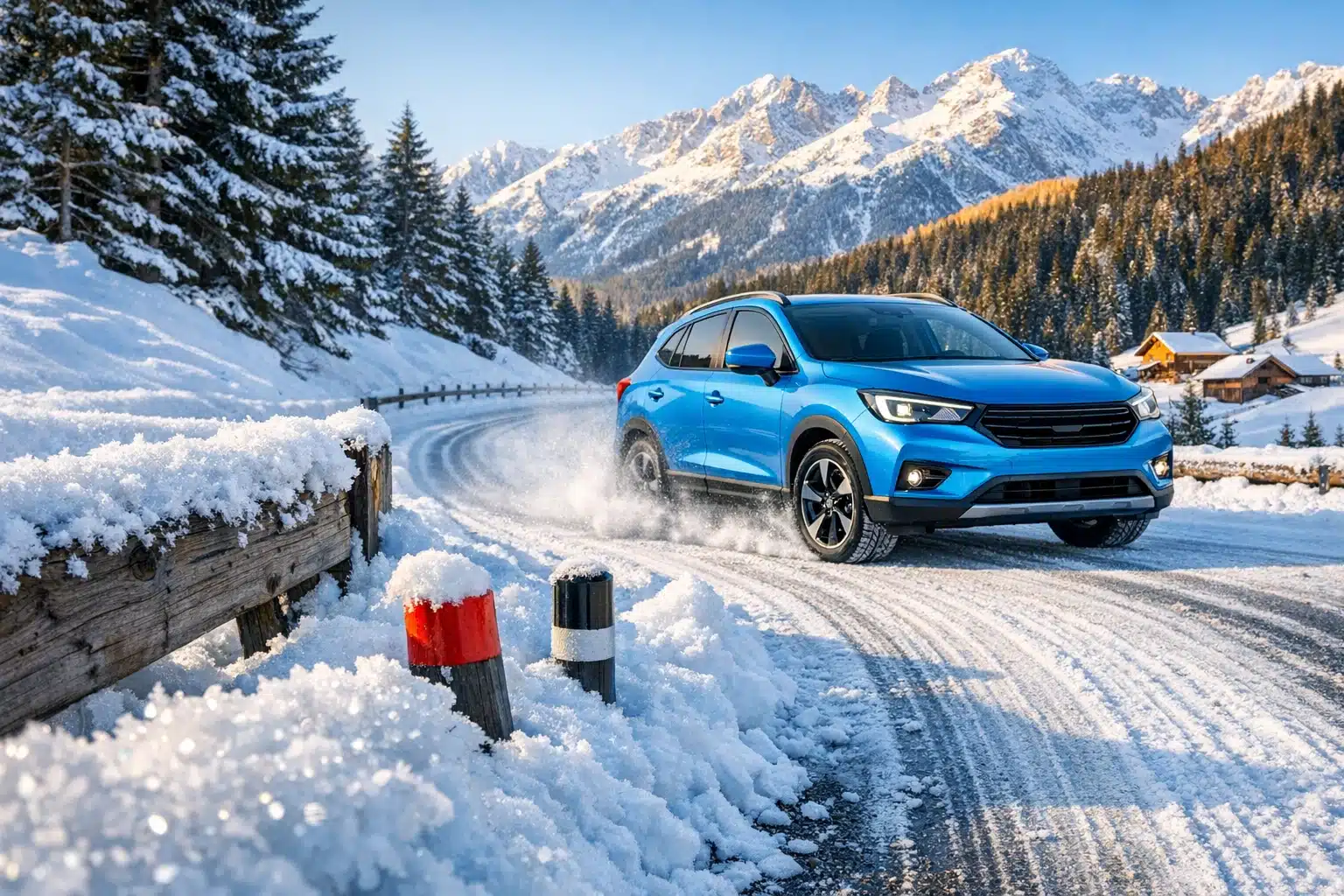
 Artificially generated image
 Benefits of Compact 4×4— Efficiency, maneuverability & rugged capability
Outline and Why Compact 4×4 Systems Matter
Compact 4×4 systems occupy a practical middle ground between simple two-wheel-drive efficiency and the heavy-duty hardware of traditional off-roaders. They are designed for drivers who may spend most of the week in traffic, then face muddy farm lanes, rattling gravel roads, or a sudden snowfall on the weekend. Understanding how these systems work matters because capability is not just about power; it is about traction, control, weight, and the software quietly making decisions beneath your feet.
In modern compact SUVs, hatchbacks, and crossovers, a 4×4 or all-wheel-drive system is usually lighter and more automated than the old-school transfer cases fitted to large body-on-frame vehicles. Instead of asking the driver to stop, pull a lever, and mechanically lock the front and rear axles together, many compact systems use electronic clutches, brake-based torque control, and drive modes that respond almost instantly to wheel slip. Sensors watch wheel speed, throttle position, steering angle, and sometimes yaw movement, then decide where torque should go. That makes these vehicles especially useful for mixed use, where convenience matters just as much as capability.
The advantage of compact packaging is not only size. A lighter vehicle often asks less from its tires on slippery surfaces, and a shorter wheelbase can help on narrow lanes or tight switchbacks. There are trade-offs, of course. Compact 4×4 systems usually have less wheel articulation, lower ground clearance, and less thermal endurance than serious off-road machinery. Still, for many owners, that is an acceptable compromise because the real challenge is not crossing a desert; it is getting through a wet campsite exit, a washboard gravel road, or a snow-covered school run without drama.
This article follows a clear path:
-
First, it explains the basic engineering logic behind compact 4×4 systems.
-
Then it looks at how these systems manage mud, where traction changes from one tire rotation to the next.
-
Next, it examines gravel, a surface that rewards stability and smart throttle control more than brute force.
-
After that, it covers snow, where tire choice and electronic calibration become just as important as torque delivery.
-
Finally, it draws practical conclusions for buyers and everyday drivers who want one vehicle to do many jobs well.
The relevance is easy to see: compact 4×4 vehicles promise flexibility without the bulk, cost, or appetite of larger off-roaders. To judge that promise fairly, it helps to see how they behave when the road stops acting like a road at all.
How Compact 4×4 Systems Manage Mud
Mud is one of the most revealing surfaces for any drivetrain because it punishes hesitation, clogs tire tread, and changes consistency every few feet. One patch may feel like wet soil, while the next behaves like glue. For compact 4×4 systems, the first challenge is maintaining forward momentum before tire tread packs solid with mud. Once the grooves fill, the tire loses its ability to bite into firmer material underneath, and the vehicle begins to skate rather than dig. That is why the best-performing systems do more than split torque front to rear; they manage wheel spin so that the tires can clean themselves while still finding grip.
Many compact systems deal with mud through an on-demand coupling paired with traction control. If the front tires begin to slip, a multi-plate clutch can send more torque rearward. At the same time, the brake system may lightly slow a spinning wheel on one axle so torque can move across the differential to the wheel with more purchase. In practical terms, the driver often feels this as a brief flutter through the pedals or a muted tug from the chassis, followed by renewed progress. Some vehicles also include a dedicated mud or ruts mode. That setting usually allows a little more wheel spin than a normal road calibration, because on mud, a completely strict stability program can cut power too early and kill the momentum needed to keep moving.
Weight and tire choice are equally important. A compact 4×4 can have an advantage over a heavier SUV because it may sink less deeply into soft ground, especially when fitted with all-terrain tires rather than road-biased rubber. But that same compact vehicle often has less underbody clearance, so if the center of the car drags on the mud itself, available traction drops sharply. In that moment, the limiting factor is not always the drivetrain; it is geometry.
-
Useful features in mud include responsive traction control, a selectable low-speed terrain mode, decent ground clearance, and tires with open tread blocks.
-
Less helpful combinations include highway tires, abrupt throttle inputs, and stopping in the deepest section unless absolutely necessary.
Picture a rain-soaked lane that looks harmless from a distance and treacherous up close, like chocolate pudding hiding wheel ruts. A good compact 4×4 does not conquer that lane through sheer force. It succeeds by balancing torque delivery, modest wheel slip, and steady momentum. That balance is the real story of mud performance.
How Compact 4×4 Systems Handle Gravel with Stability and Precision
Gravel is different from mud because the surface is loose rather than adhesive. Tires do not usually clog; instead, they ride over countless shifting stones that move under load. That creates a curious situation: a little slip can be useful, but too much slip quickly turns into instability. On gravel, compact 4×4 systems work best when they help the vehicle stay settled under acceleration, preserve steering accuracy, and avoid abrupt torque transfers that upset the chassis. The sensation should be confidence, not commotion.
A simple way to frame the appeal is this: Explore compact 4×4 driving solutions — affordable, efficient systems designed for off‑road capability, urban maneuverability, and everyday reliabilit. Gravel roads show exactly why that formula resonates. Many drivers want better traction and composure on rural or unpaved surfaces, yet they do not need a full-size truck for the school run or grocery parking lot.
On gravel, many compact 4×4 systems default to a mostly front-driven setup, then send torque rearward as the front axle begins to unload or spin. The goal is not always maximum lock. In fact, a fully rigid torque split can make some vehicles push wide in a corner. A smarter calibration meters power progressively, helping the rear axle contribute without making the front tires surrender their steering role. Vehicles with gravel or loose-surface modes may also relax stability control slightly, allowing the car to rotate naturally instead of cutting power at the first hint of yaw. That matters because gravel driving often rewards fluidity more than strict electronic intervention.
Braking is part of the story as well. Anti-lock braking systems prevent wheel lock, but on loose gravel that can lengthen stopping distances compared with dry pavement. A compact 4×4 helps most during acceleration and directional stability; it does not repeal physics when it is time to stop. Drivers still need longer following distances and smoother inputs.
-
Well-calibrated torque transfer improves launch traction on steep gravel climbs.
-
Balanced stability software helps keep the vehicle pointed where the driver intends.
-
Good suspension tuning reduces skipping and bounce over washboard surfaces.
Think of gravel as a conversation between tire and surface, not a wrestling match. The best compact 4×4 systems listen, adjust, and keep the vehicle composed enough for the driver to stay calm and accurate.
How Compact 4×4 Systems Cope with Snow and Winter Roads
Snow flatters and exposes a drivetrain at the same time. It flatters it because even a moderate amount of extra traction can make a vehicle feel dramatically more secure when pulling away from a junction or climbing a slick hill. It exposes it because winter roads are never just one thing. Fresh powder, packed snow, meltwater, slush, and hidden ice can all appear on the same trip. A compact 4×4 system therefore has to do more than send torque to additional wheels. It must work seamlessly with traction control, stability control, throttle mapping, and, most importantly, suitable winter tires.
The first truth worth stating clearly is that 4×4 helps a vehicle go, but it does not automatically help it stop. Braking and cornering grip depend heavily on tire compound and tread design. A compact crossover on proper winter tires will often outperform a more powerful all-wheel-drive vehicle fitted with summer tires once temperatures drop. That is why winter capability should be treated as a system-level result, not a badge on the tailgate.
When snow covers the road, compact 4×4 systems usually improve confidence in three areas. First, they reduce front-wheel spin during takeoff, which helps the vehicle pull away with less fuss. Second, they distribute torque to the axle with more grip, which can stabilize the car when one side of the road is icier than the other. Third, they work with stability software to manage sudden changes in yaw. Some vehicles also offer snow modes that soften throttle response so the driver does not accidentally overwhelm the available grip with a sharp accelerator input.
There are still limits. Deep snow can exceed the ground clearance of a compact vehicle, turning the underside into a sled. Wet slush can also drag at the tires and provoke aquaplaning at surprisingly low speeds. In those conditions, the refinement of the drivetrain matters less than momentum, tire quality, and driver patience. A large traditional 4×4 may have more clearance and a tougher low-speed toolkit, but it will not necessarily be easier to place on narrow urban streets or easier to live with every day.
-
Best winter gains come from combining 4×4 with winter tires, measured throttle use, and realistic speeds.
-
Useful features include hill descent control, snow drive modes, and heated mirrors for visibility.
-
Common myths include the idea that all-wheel drive shortens stopping distances on ice; it does not.
On a cold morning, when the driveway crackles under boots and the road looks polished by frost, compact 4×4 systems earn their reputation not with drama, but with quiet, well-timed competence.
What This Means for Everyday Drivers and Buyers
For the target audience of compact 4×4 vehicles, the central question is rarely, “Can this machine survive an expedition?” It is usually far more practical: “Will this car handle my mixed life without becoming expensive, cumbersome, or frustrating?” That is where compact 4×4 systems make their strongest case. They suit drivers who commute in town, visit rural areas, drive to trailheads, face real winters, or simply want a larger safety margin when the weather turns ugly. Their value lies in versatility rather than spectacle.
When comparing models, buyers should look beyond the headline claim of four driven wheels. The calibration of the system matters. Some vehicles react only after front slip is obvious, while others pre-load the rear axle more proactively. Tires matter just as much. Ground clearance, approach angles, and underbody protection matter if muddy lanes or snowy back roads are common. So does the software interface: a useful terrain mode should be easy to select and predictable in effect. A complicated system that hides important controls in several menus can be less helpful than a simpler one with clear, repeatable behavior.
-
Urban drivers should prioritize compact dimensions, efficient drivetrains, and unobtrusive operation in daily traffic.
-
Rural drivers may care more about tire options, suspension compliance, and mud or snow drive modes.
-
Frequent travelers should pay attention to cargo flexibility, highway refinement, and the availability of quality all-terrain or winter tires in the correct size.
Ownership habits matter too. A compact 4×4 performs best when it is maintained with the same realism that inspired its purchase. Matching tires across all four corners, healthy brake components, correct alignment, and regular fluid service help the system behave as designed. Drivers also need to use judgment. No software can fully compensate for overconfidence, especially in snow or deep mud.
In summary, compact 4×4 systems are ideal for people who want one vehicle to cover ordinary roads and difficult surfaces with minimal fuss. They manage mud through momentum and controlled slip, handle gravel through stability and measured torque transfer, and improve snowy travel when paired with proper tires and sensible driving. If your goal is everyday usability with extra reach when conditions deteriorate, this category deserves serious attention because it delivers capability in a form most people can actually live with.