Confidence You Can See: Hot Men’s Swimwear Trends 2026
Outline: Why Swimwear Fit, Color, and Fabric Matter in 2026
Swimwear has a small but stubborn influence on how a day unfolds: if the fit is off, you notice it every time you sit, dive, or walk back from the sea. That is why the 2026 conversation matters. Designers are treating trunks, briefs, and hybrid shorts as pieces that must balance movement, appearance, and comfort, not just bright summer styling. A clear outline helps before the shopping rush begins.
Men’s swimwear is no longer a narrow category built around a few loud prints and standard mesh shorts. In recent seasons, buyers have become more selective, and that shift has pushed design forward. A modern pair of swim shorts may now include four-way stretch, a compression liner, laser-cut drainage points, recycled fibers, and a more tailored silhouette. At the same time, classic options such as shorter trunks, sport-inspired briefs, and clean solid-color styles are returning with sharper proportions. The result is more choice, but also more room for confusion if you are trying to separate genuine comfort features from marketing language.
This guide is structured to make the subject easier to navigate. It looks at the three decisions that shape most purchases: how a suit fits, how it looks, and how it performs once it gets wet. Instead of treating these as separate style topics, it connects them, because they always interact. A short inseam changes the visual effect of a print. A darker color may look refined, but fabric quality determines whether it keeps that look after chlorine, salt, and sun exposure. Even the best trend can fall flat if the waistband shifts or the liner rubs.
- First, the article explains how to choose the right fit based on body proportions, activity level, and personal comfort.
- Next, it examines the colors and patterns gaining momentum for 2026, from refined earth shades to sharper aquatic tones.
- Then, it breaks down modern swim fabrics and comfort details, including stretch blends, drying speed, UV protection, and liner design.
- Finally, it closes with a practical summary for men who want to buy fewer pieces and wear them better.
If swimwear once felt like an afterthought, 2026 is treating it more like essential summer equipment. The good news is that better choices are easier to make when you know what each design decision is actually doing for you.
How to Choose the Right Swimwear Fit
The best swimwear fit begins with purpose, not trend. A man shopping for lap swimming, beach volleyball, resort lounging, and poolside travel may technically be shopping in one category, but those settings ask for different things. For active use, a secure waistband, stable leg opening, and low-bulk construction matter more than visual drama. For a relaxed holiday wardrobe, drape, softness, and versatility with a linen shirt or tee may matter more. Start by asking one practical question: what will this suit be doing most of the time?
Length is usually the first visible choice, and it changes both function and style. In men’s swim trunks, a 4 to 5 inch inseam tends to look sportier and more fashion-forward. A 5 to 7 inch inseam is often the most versatile range because it balances mobility and coverage. A 7 to 9 inch inseam feels more traditional and can work well for men who prefer a calmer silhouette or want their swimwear to double as casual shorts. None of these is universally better. The right answer depends on proportions, comfort level, and the setting.
Waist construction is just as important. A fully elastic waist with an adjustable drawcord is forgiving, practical, and easy for most body types. A flatter front can look neater, especially when paired with tailored trunks, but it needs accurate sizing. If the waistband pinches when dry, it will rarely feel better after a swim. Leg opening matters too. A hem that flares too wide can make trunks look boxy, while one that sits too tight may restrict movement or cling awkwardly when wet.
Men who want a more balanced look often do well by thinking in visual lines rather than body “rules.” Shorter trunks can create a longer-leg effect. Vertical side stripes or contrasting side panels can add definition. Solid colors generally look cleaner, while medium-scale prints can soften the outline of the garment. None of this is about hiding your body; it is about choosing proportions that feel natural on you.
- Choose shorter inseams for a more athletic, modern profile.
- Choose mid-length trunks for all-round use and easy styling.
- Choose longer cuts if you prioritize coverage or a board-short look.
- Check that the waistband stays in place without over-tightening the drawcord.
- Walk, sit, bend, and raise your knee before buying if possible.
The lining deserves special attention. Traditional mesh still appears in many budget styles, but many men prefer boxer-brief compression liners because they reduce chafing and improve support. If you dislike any inner layer, unlined or lightly lined trunks can work, especially for casual wear. In the end, a good fit is the one that lets you forget about constant adjustment. When that happens, confidence follows almost quietly, like the tide coming in without asking permission.
Trending Colors and Patterns for 2026
Color trends in men’s swimwear for 2026 are moving in two directions at once: grounded and expressive. On one side, there is a growing appetite for refined shades that feel mature and easy to wear, including clay, olive, espresso, deep navy, mineral grey, and washed black. On the other, there is room for brighter seasonal color, especially tones that suggest water, sun, and travel. Think sea-glass green, cobalt, mango, coral, muted tangerine, and a cleaner version of turquoise. The loud neon wave that once dominated resort racks is giving way to colors with slightly more depth and texture.
Explore 2026 men’s swimwear trends with insights on fit, fabrics, colors, and confidence‑boosting styles designed for comfort and modern appeal.
Patterns are also becoming more considered. Instead of chaotic all-over graphics, 2026 leans toward prints with structure. Micro-geometrics, retro stripes, abstract wave motifs, watercolor-inspired florals, and tonal textures are strong candidates for the season. Many of these patterns feel easier to wear because they create interest without overwhelming the eye. Placement prints are especially useful: a clean waistband and controlled print distribution can make a trunk feel more premium than a busy design printed edge to edge.
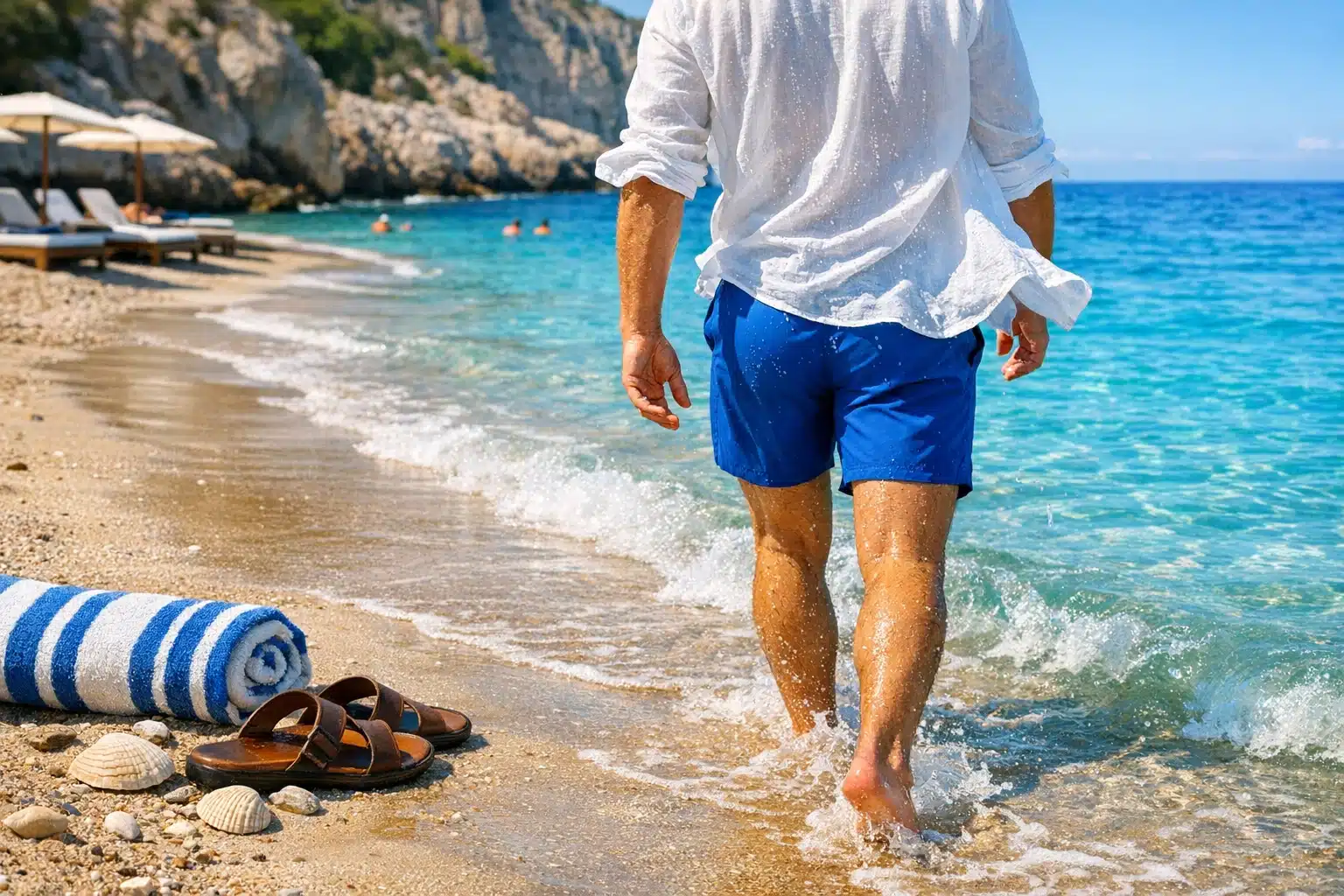
One of the easiest ways to choose color is to think about where the swimwear will appear beyond the beach. Darker solids pair naturally with open shirts, polos, and simple sandals. Earth tones work well in travel wardrobes because they blend into casual outfits. Aquatic blues and greens look fresh in bright sunlight and tend to photograph well without appearing too harsh. If you enjoy patterns but rarely wear them, start with a smaller repeat or a two-color design. That keeps the look active but still manageable.
- Best versatile solids: navy, olive, charcoal, and espresso.
- Best trend-driven accents: coral, sea-glass green, cobalt, and sun-faded orange.
- Best pattern directions: vertical stripe variations, abstract water graphics, small geometrics, and restrained tropical motifs.
Scale matters as much as color choice. Smaller prints often read as more refined from a distance. Medium patterns can feel balanced on most builds. Very large graphics make the strongest statement, but they work best when the rest of the suit is simple. The key trend for 2026 is not just “be bolder.” It is “be more intentional.” A good color story should support the fit and the fabric, not compete with them. When those three elements align, even a simple pair of trunks can look current, personal, and far more expensive than it is.
Fabric and Comfort Features in Modern Swimwear
If fit is what you notice first, fabric is what determines whether the suit earns a second wear. Modern swimwear has improved because textile development has become more specific. Designers now build for stretch recovery, drying speed, resistance to chlorine or salt, and reduced friction against the skin. That matters because comfort problems often begin after the first swim, not in the fitting room. A trunk can look sharp on a hanger and still become heavy, saggy, or scratchy when wet.
The main fabric families each bring different strengths. Nylon-rich swimwear usually feels softer and smoother against the skin, which is why many premium-feeling trunks use it. Polyester generally offers better color retention and tends to handle chlorine exposure well, making it a strong option for frequent pool use. Many suits combine one of these base fibers with elastane or spandex, usually in a modest percentage, to provide stretch and recovery. A blend in the 10 percent to 20 percent elastane range is common in performance-oriented swimwear because it supports movement without making the fabric feel flimsy.
Comfort features have become more sophisticated too. The old-school scratchy mesh brief is no longer the only lining option. Many newer suits use compression short liners that reduce inner-thigh rubbing and provide a more secure feel. Flatlock seams can lower irritation, while bonded hems reduce bulk. Quick-drain pockets and discreet eyelets help water escape instead of pooling in the fabric. Some premium fabrics also offer UPF 50 protection, which commonly means blocking about 98 percent of UV radiation on the covered area, though it never replaces sunscreen on exposed skin.
- Nylon blends usually feel softer and more fluid.
- Polyester blends often resist fading and chlorine better.
- Elastane adds flexibility, shape retention, and freedom of movement.
- Compression liners can improve support and reduce chafing.
- UPF-rated fabric adds helpful sun protection where the garment covers.
Another growing part of the conversation is recycled material. Recycled polyester and recycled polyamide are now common in swim collections, and they can perform very well when the construction is solid. Still, sustainability claims should not distract from quality. A recycled fabric that stretches out quickly is not a better long-term purchase than a conventional one that lasts for years. In practical terms, good swimwear fabric should feel light in water, recover its shape after drying, and stay comfortable through movement, heat, and repeated wear. That is the real test, and 2026 is finally delivering more options that pass it.
Final Thoughts for Men Buying Swimwear in 2026
For men shopping this season, the smartest approach is not to chase every new style that appears on a screen. It is to build a short list of features that matter in your real life. If you travel often, quick-drying fabric and an easy-to-style color may be worth more than a dramatic print. If you spend time in chlorinated pools, fabric resilience should move to the top of the list. If your ideal summer day includes swimming, lunch, a walk, and sitting around for hours, then comfort under movement becomes just as important as visual appeal.
There is also a broader shift worth noticing. Men’s swimwear in 2026 is more democratic than it used to be. You do not have to choose between bland utility and fashion that feels impractical. Mid-length trunks can look polished. Sportier cuts can still feel wearable outside a competitive setting. Earth tones can be interesting, and brighter colors can still feel grown-up when the cut is clean. This variety is useful because confidence rarely comes from copying a trend exactly. It usually comes from recognizing which trend matches your habits, your environment, and your sense of style.
A practical buying checklist can help keep that decision grounded:
- Pick the primary use first: swimming, relaxing, training, or travel.
- Choose an inseam that suits your proportions and comfort preferences.
- Check the waistband, lining, and seam feel before focusing on pattern.
- Favor fabrics that match your environment, especially if chlorine or long sun exposure is common.
- Think about what you will wear with the suit after leaving the water.
If you only buy one pair, make it the most versatile one. A mid-length trunk in navy, olive, or a tasteful aquatic tone with four-way stretch and a comfortable liner will serve many men well. If you buy two, add one option with more personality, perhaps a restrained print or a warmer seasonal shade. That way your swimwear drawer does not become a row of almost identical choices.
In the end, good swimwear should let you focus less on the garment and more on the day itself. The right fit supports movement, the right color helps you feel current without trying too hard, and the right fabric stays comfortable long after the first dive. For men who want style that looks modern and feels easy, 2026 offers a welcome message: choose with intention, and confidence will not need much encouragement.