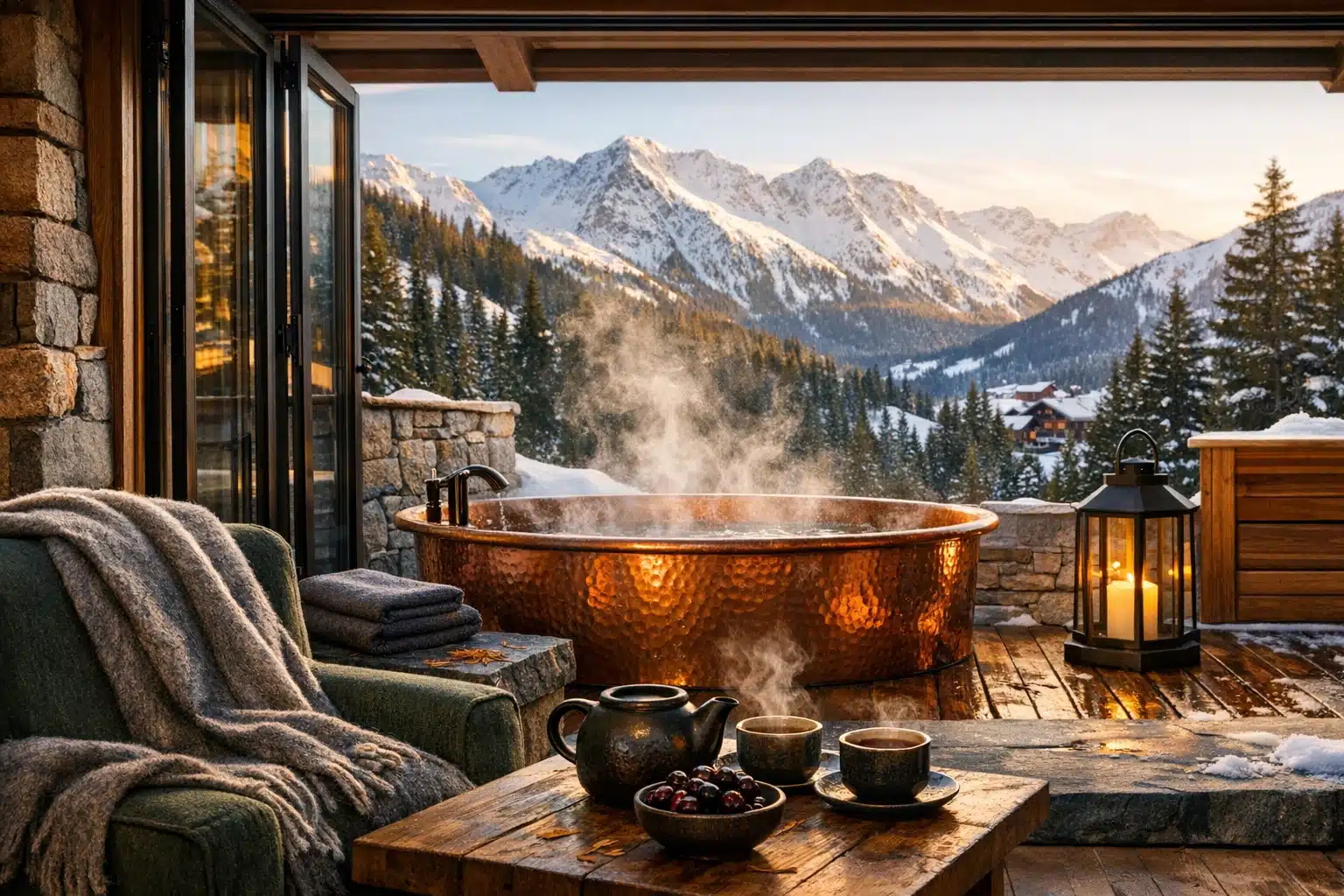
 Artificially generated image
 Luxury Hotel Rooms with Hot Tubs: Are They Worth It?
Introduction: Why Luxury Stays and In-Room Hot Tubs Still Matter
Luxury hotel rooms with hot tubs sit at the crossroads of comfort, design, and modern travel expectations. For some guests, they turn an ordinary overnight stay into a quiet reset; for others, they are a practical way to enjoy spa-like privacy without leaving the room. Yet the upgrade is not always the right choice, especially when rate differences, suite layouts, and hotel policies vary widely. Understanding what you are paying for helps separate lasting value from polished marketing.
The appeal of a luxury stay is not just about marble bathrooms, higher thread counts, or the thrill of entering a suite that feels larger than daily life. It is also about control. Travelers increasingly want environments that give them room to slow down, recover from long flights, celebrate milestones, or simply enjoy silence for an evening. A private jacuzzi adds another layer to that promise because it offers a leisure feature that belongs entirely to the guest for the duration of the stay. There is no shared schedule, no crowded spa corridor, and no need to carry a robe through the lobby.
This article follows a practical outline so readers can compare experience with value:
- What makes a luxury stay feel meaningfully different from a standard booking
- How a private jacuzzi changes privacy, relaxation, and in-room use patterns
- Which suite types usually include premium bathing features and how they differ
- What to examine before booking, including photos, policies, reviews, and timing
- Who benefits most from these rooms and when the extra cost may not make sense
That structure matters because the phrase “hotel room with hot tub” can describe very different products. One property may offer a spacious corner suite with a deep soaking tub set beside panoramic windows, while another may list a smaller room with an older whirlpool inserted into the bathroom without much privacy or design thought. The traveler who understands those distinctions is far less likely to overpay. A good decision starts by looking beyond the romance of the image and asking a simpler question: will this room improve the stay in ways you will actually use?
Privacy and Relaxation: The Real Advantages of a Private Jacuzzi
The strongest argument for booking a luxury room with a private jacuzzi is privacy. Shared amenities can be pleasant, but they rarely deliver the same sense of ownership over time and atmosphere. In a private setting, guests decide when to use the tub, how long to stay, what music to play, whether to open the curtains to a city skyline or keep the lights low, and how to shape the mood without interruption. That freedom is not trivial. In hospitality, convenience often creates the difference between a feature that sounds impressive and one that becomes central to the stay.
Relaxation is the second major benefit, and it works on multiple levels. Warm water immersion is widely associated with muscle comfort, stress relief, and a calming transition from activity to rest. After a long day of meetings, sightseeing, or travel delays, the experience can feel like pressing a reset button. The hallway noise fades, luggage lies unopened in a corner, and for a little while the room stops being temporary. It becomes a retreat. Even travelers who are not drawn to spa culture often appreciate the practical side of this feature, especially when it helps ease fatigue after walking-heavy itineraries or cold-weather travel.
There are also social and emotional benefits. Couples often book these suites for anniversaries, proposals, mini-moons, or birthday weekends because the room itself becomes part of the event rather than just the place where they sleep. Solo travelers may value the same feature for entirely different reasons: peace, recovery, and a feeling of self-directed comfort that is hard to find in public hotel spaces. Small families sometimes choose larger suites with premium bath features because they expect to spend more time indoors during bad weather or shoulder-season trips.
Still, the best private jacuzzi experiences share a few common traits:
- Clear separation between sleeping and bathing zones
- Strong ventilation and careful maintenance
- Sound insulation that preserves the sense of retreat
- Thoughtful lighting, robes, and seating nearby
- Enough room to enjoy the suite before and after using the tub
Without those elements, the feature can feel decorative instead of useful. With them, it can become the reason a short stay feels surprisingly memorable.
Suite Types Compared: What You Actually Get at Different Price Levels
Explore the benefits of luxury hotel rooms with hot tubs, from privacy and relaxation to booking tips and suite comparisons.
Not every hot-tub room sits in the same category, and that is where many booking mistakes begin. Hotels use language such as deluxe room, junior suite, executive suite, spa suite, romance package, presidential suite, and wellness room, but those labels are not standardized across the industry. A junior suite at one property may simply be a large open-plan room with a seating area, while at another it may include a partially divided living space, upgraded minibar, premium bathroom finishes, and a dedicated whirlpool tub. Reading the room name alone is never enough.
At the more accessible end of the spectrum, some upscale properties offer standard rooms with oversized jetted tubs. These can work well for travelers who care more about the water feature than about entertaining space or full-suite separation. The next step up usually includes junior or studio suites, where the room feels more residential and often adds better views, more square footage, and a bathroom designed as part of the room experience rather than an afterthought. In upper-tier suites, the tub is usually one element within a broader luxury package that may also include a separate lounge, better furnishings, personalized service, premium toiletries, late checkout, or concierge assistance.
When comparing options, it helps to focus on concrete variables rather than labels:
- Room size and whether the layout is open plan or separated
- Placement of the tub, including window access and visual privacy
- Bathroom design, ventilation, and distance from the bed
- Included services such as breakfast, butler support, or spa access
- View quality, floor level, and noise exposure
- Recent renovation status shown in current guest photos
Price differences often reflect more than prestige. Larger suites cost more to clean, maintain, heat, and staff. Premium floors also command higher rates because of view value and lower inventory. In many city hotels, a hot-tub suite can carry a noticeable premium over a standard room, especially on weekends or event dates. In resorts, the gap may widen further if the room also includes a terrace, plunge pool access, or bundled amenities. The smartest comparison is not simply “suite versus regular room,” but “time spent in the room versus money spent on the upgrade.” If the suite becomes part of the trip’s entertainment, dining, and recovery space, the value proposition looks very different.
Booking Wisely: Photos, Policies, Reviews, and the Hidden Details
A beautiful listing can sell a fantasy in seconds, but the reality of a luxury hot-tub room lives in the details. Before booking, travelers should examine the room listing with the same care they would use when comparing flights or insurance terms. Start with the photos. Look for multiple angles, not just one polished image of bubbles and mood lighting. If the hotel shows the tub but not the full room, the placement may be awkward. If there are no bathroom photos at all, that absence may tell its own story. Videos, virtual tours, and recent guest images are particularly useful because they reveal size, wear, and how the feature fits into the overall design.
Reviews are the next filter, but they should be read with strategy. Instead of focusing only on star ratings, scan for recurring comments about cleanliness, noise, water temperature, maintenance speed, and whether the jacuzzi was easy to use. One complaint can be random; ten similar comments across several months suggest a pattern. Travelers should also verify whether the tub is jetted, heated, oversized, or simply described with vague luxury language. Hospitality marketing can be elegant, but elegance is not always specificity.
Important booking checkpoints include:
- Whether the hot tub is inside the room, on a private terrace, or in a shared area
- If the jets, heating system, or fill time are mentioned clearly
- Any age restrictions, quiet hours, or usage policies
- Whether breakfast, parking, or resort fees change the total rate materially
- Cancellation terms in case the exact room type becomes unavailable
- Renovation notices that may affect noise or amenity access
Timing matters as well. Demand for premium suites often rises on Fridays, Saturdays, holidays, and around local events. Midweek stays in urban hotels can sometimes offer better availability for leisure travelers, while shoulder-season resort bookings may produce stronger value than peak dates with identical room categories. Calling the hotel directly can also help, not because a better rate is guaranteed, but because staff may clarify details that booking platforms summarize too loosely. Asking whether the room has been recently updated, whether the tub overlooks a view or faces an interior wall, and whether there is a true suite divider can save money and expectations.
In short, smart booking protects the emotional side of luxury. Nothing deflates a special stay faster than discovering that the “private jacuzzi suite” looked grander online than it feels at midnight after check-in.
Who Should Splurge, Who Should Skip, and How to Judge the Value
Whether a luxury hotel room with a hot tub is worth it depends less on the room itself than on the traveler’s priorities. For guests planning a celebration, a winter getaway, a staycation, or a recovery-focused weekend, the upgrade often makes clear sense. These travelers tend to spend meaningful time in the room, order room service, linger in the bath, and treat the suite as part of the event. In that context, the room is not just accommodation. It is the venue, the atmosphere, and sometimes the memory that outlasts the trip itself.
For business travelers, the answer is more nuanced. If the schedule includes late arrivals, early departures, and full days away from the property, the premium may offer little practical return. The same can be true for active vacationers who plan to spend every daylight hour outdoors. Paying extra for a feature you barely use is the hospitality version of buying theater tickets and leaving before the second act. Lovely in theory, wasteful in practice.
A useful way to judge value is to ask three direct questions:
- How many hours will I realistically spend enjoying the room, not merely sleeping in it?
- Would this feature replace another expense, such as a spa visit or outside entertainment?
- Am I booking for function, celebration, or simple curiosity?
If the answers point toward heavy in-room use, emotional significance, or a desire for privacy that public facilities cannot match, the upgrade is easier to justify. If not, a well-designed standard room in a strong property may offer better overall value, especially when location, service, and sleep quality matter more than novelty.
For the target audience considering this type of stay, the best approach is balanced rather than impulsive. Choose the suite when it aligns with the purpose of the trip, the length of the stay, and the amount of time you want to devote to the room itself. Skip it when the price jump is steep, the listing is vague, or the rest of the itinerary leaves little room to enjoy the feature. Luxury works best when it feels intentional. When chosen well, a private jacuzzi suite can turn a short escape into something cinematic and deeply comfortable. When chosen badly, it is simply expensive plumbing with a good camera angle.